
If you’ve struggled to breathe through your nose for as long as you can remember, constantly feel congested on one side, or wake up every morning with a dry mouth from breathing through it all night, a deviated septum might be the culprit. This common condition affects an estimated 70 to 80% of people to some degree, though only a fraction experience symptoms severe enough to warrant surgical correction.
Septoplasty is the surgical procedure that straightens a deviated septum, restoring normal nasal breathing and often dramatically improving quality of life. Unlike cosmetic rhinoplasty which changes how your nose looks, septoplasty focuses on fixing the internal structure to improve how your nose functions. The good news? It’s one of the most successful procedures in medicine, with over 85% of patients experiencing significant breathing improvement.
This comprehensive guide covers everything you need to know about deviated septum surgery: what a deviated septum is, how to know if you have one, what the septoplasty procedure involves, what recovery looks like, potential risks, whether it will change your nose’s appearance, and when combining it with cosmetic rhinoplasty makes sense. Whether you’re just starting to research your options or preparing for surgery, this article provides the complete picture.
What Is a Deviated Septum?
Understanding Nasal Anatomy
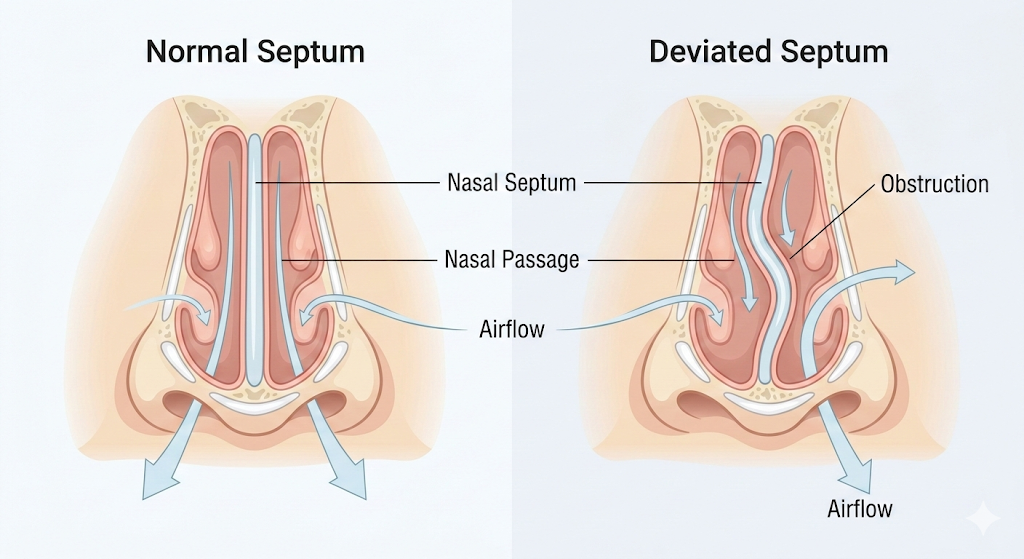
Your nasal septum is the wall that divides your nose into left and right nasal passages. It’s composed of both cartilage (in the front) and bone (in the back), covered by a thin layer of mucous membrane on each side. In an ideal nose, the septum runs straight down the middle, creating two equal-sized passages for airflow.
However, most people’s septa aren’t perfectly straight. The septum can be:
- Shifted to one side, making one nasal passage narrower than the other
- Bent or curved in an S-shape or C-shape
- Have a prominent spur (a sharp protrusion of bone or cartilage)
- Be crooked in multiple places, creating a complex deviation
What “Deviated” Means
A deviated septum simply means the septum is crooked, off-center, or otherwise not straight. The deviation can be:
Mild: Slightly off-center but causing no symptoms. Most people have at least a minor deviation.
Moderate: Noticeably shifted, causing occasional symptoms or symptoms with colds/allergies.
Severe: Significantly blocking one or both nasal passages, causing persistent breathing difficulty.
Causes of a Deviated Septum
Congenital (Birth):
Many people are born with a deviated septum or develop it during childhood and adolescence as the face grows. The septum may grow unevenly or at a different rate than surrounding structures.
Trauma:
Nasal injuries from sports, accidents, falls, or physical altercations can displace the septum. Even old injuries from childhood that weren’t treated can cause permanent deviation. This is one of the most common causes of severe deviation.
Aging:
Over time, the septum can gradually shift or develop new deviations as cartilage weakens and nasal structures change with age.
Previous Surgery:
Occasionally, nasal surgery can inadvertently create or worsen a septal deviation if not performed carefully.
How Common Are Deviated Septa?
Prevalence:
Studies show 70 to 80% of people have some degree of septal deviation, but most never experience symptoms severe enough to seek treatment.
Symptomatic Cases:
Only about 20 to 30% of people with deviated septa have symptoms that significantly impact their quality of life and consider surgery.
Gender:
Men are slightly more likely to have symptomatic deviated septa, possibly due to higher rates of nasal trauma from sports and physical activities.
Symptoms and Self-Assessment
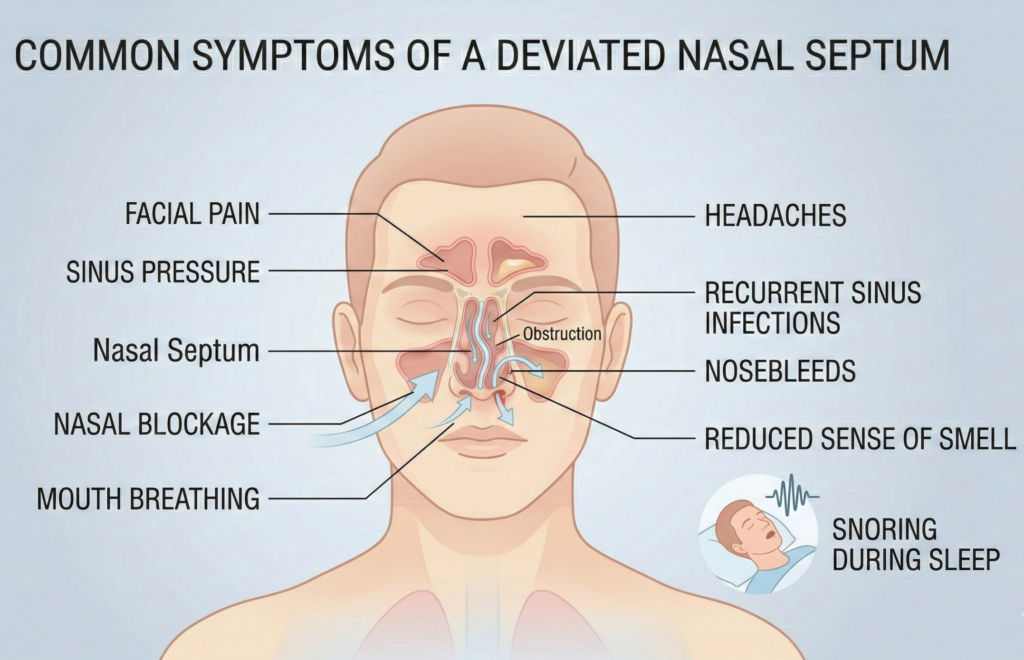
Common Symptoms of a Deviated Septum
Nasal Obstruction:
The hallmark symptom is difficulty breathing through one or both nostrils. One side is usually worse than the other. The obstruction may be constant or vary with position, activity level, or whether you have allergies or a cold.
Preference for One Side:
You may notice you always breathe better through one nostril than the other. When one side is completely blocked, you’re forced to breathe through the other side or through your mouth.
Mouth Breathing:
Especially during sleep or exercise, you can’t get enough air through your nose and must breathe through your mouth instead.
Chronic Congestion:
Persistent feeling of stuffiness that doesn’t improve with decongestants or allergy medications. Unlike temporary congestion from a cold, this is constant.
Recurrent Sinus Infections:
When the septum blocks sinus drainage pathways, mucus can’t drain properly, leading to frequent sinusitis. You may have multiple sinus infections per year.
Snoring and Sleep Disturbances:
Nasal obstruction forces mouth breathing during sleep, often causing snoring. Some patients develop or worsen sleep apnea symptoms.
Nosebleeds:
Airflow over the deviated area can dry out the mucous membrane, causing crusting and frequent nosebleeds, especially in dry climates or during winter.
Facial Pain or Headaches:
If the deviation causes sinus pressure or if a septal spur touches the opposite turbinate, it can cause chronic facial pain, pressure, or headaches.
Post-Nasal Drip:
Blocked drainage pathways can cause mucus to accumulate and drip down the back of your throat, causing irritation and chronic throat clearing.
Reduced Sense of Smell:
Severe obstruction preventing air from reaching the olfactory receptors high in the nose can diminish your sense of smell.
Noisy Breathing:
Some people with deviated septa have audible breathing, wheezing, or whistling sounds when air passes through the narrowed passage.
Self-Assessment Tests
The Nostril Test:
Close your mouth. Block one nostril completely with your finger and breathe in through the open nostril. How easily can air flow through? Repeat on the other side. If one side feels significantly more restricted, you may have a deviated septum on that side.
The Cottle Maneuver:
Gently pull your cheek outward (toward your ear) on one side while breathing in through your nose. If breathing becomes noticeably easier when you pull, it suggests either a deviated septum or weak nasal valves on that side.
The Sleep Position Test:
Notice if you can only sleep comfortably on one side. Many people with deviated septa can only breathe well when lying on one particular side because gravity helps open the less-obstructed passage.
The Exercise Test:
During moderate exercise, if you find yourself gasping for air through your mouth because you can’t get enough through your nose, obstruction is likely significant.
When Symptoms Warrant Medical Attention
Consider seeing a doctor if:
- You can never breathe comfortably through your nose
- You have frequent sinus infections (3+ per year)
- Your sleep is disrupted by breathing difficulties
- Exercise is limited by inability to breathe through your nose
- Over-the-counter remedies provide no lasting relief
- Quality of life is significantly impacted
Diagnosis and Medical Evaluation
Initial Consultation
Medical History:
Your doctor will ask about your symptoms (when they started, which side is worse, what makes them better or worse), history of nasal trauma or previous surgery, allergies and sinus problems, medications you’ve tried, and how symptoms affect your daily life and sleep.
Symptom Documentation:
Be prepared to describe in detail how your breathing difficulties impact you. The more specific you can be, the better your doctor can assess severity and recommend treatment.
Physical Examination
External Examination:
The doctor looks at your nose externally for signs of previous injury, asymmetry, or deformity that might correlate with internal deviation.
Anterior Rhinoscopy:
Using a bright light and nasal speculum (a tool that gently opens your nostril), the doctor looks inside your nose to directly visualize the septum, turbinates, and passages. They can see if your septum is deviated and to what degree.
Nasal Endoscopy:
For a more detailed view, the doctor may use a thin, flexible camera (endoscope) inserted into your nose. This provides a comprehensive view of your entire nasal cavity, sinuses, and the full extent of septal deviation. It’s uncomfortable but not painful, typically done with topical anesthetic spray.
Diagnostic Imaging
CT Scan:
If chronic sinus problems accompany your deviated septum, a CT scan of your sinuses may be ordered. This shows both the bone and soft tissue, revealing the exact location and degree of deviation, sinus anatomy and any blockages, polyps or other abnormalities, and whether chronic sinusitis is present.
Not Always Necessary:
Many septoplasties are performed based on clinical examination alone without imaging. CT scans are more important when sinus disease is suspected or complex anatomy needs clarification.
Objective Breathing Tests
Some specialists use advanced testing to objectively measure nasal airflow:
Rhinomanometry:
Measures the pressure and flow of air through each nostril, providing numerical data about obstruction severity.
Acoustic Rhinometry:
Uses sound waves to map the nasal passages and identify where obstruction occurs.
Peak Nasal Inspiratory Flow:
Measures maximum airflow during forced nasal inhalation.
These tests aren’t always necessary but can help document severity for insurance purposes or provide baseline data to compare post-operative improvement.
Differential Diagnosis
Your doctor will rule out other causes of nasal obstruction:
Allergic Rhinitis:
Allergies cause swollen turbinates and congestion but shouldn’t cause structural deviation.
Enlarged Turbinates:
Turbinate hypertrophy can coexist with or mimic septal deviation symptoms.
Nasal Polyps:
Benign growths that obstruct nasal passages, often associated with chronic sinusitis or allergies.
Nasal Valve Collapse:
Weakness in the cartilage that forms the narrow part of the nasal valve, causing obstruction separate from septal deviation.
Chronic Sinusitis:
Persistent sinus inflammation and infection can cause congestion independent of septal deviation.
Often, deviated septa coexist with one or more of these conditions, and comprehensive treatment addresses all issues.
The Septoplasty Procedure
Pre-Operative Preparation
Medical Clearance:
If you have medical conditions or take certain medications, you may need clearance from your primary care doctor and possibly blood work.
Medication Adjustments:
Stop taking aspirin, ibuprofen, and other NSAIDs for 2 weeks before surgery as they increase bleeding risk. Stop vitamin E, fish oil, and herbal supplements. Continue or adjust other medications as directed by your surgeon.
Smoking Cessation:
You must stop smoking at least 4 weeks before and after surgery. Smoking dramatically increases complications and impairs healing.
Pre-Authorization:
Your surgeon’s office will obtain insurance pre-authorization documenting medical necessity for the procedure.
Anesthesia Options
General Anesthesia (Most Common):
You’re completely asleep during the procedure. This is safest and most comfortable for complex septoplasties.
Local Anesthesia with Sedation:
For very straightforward cases, some surgeons use local anesthetic injections with IV sedation. You’re deeply relaxed but technically awake.
The Surgical Technique
Duration:
Septoplasty typically takes 45 to 90 minutes, though complex deviations may take longer.
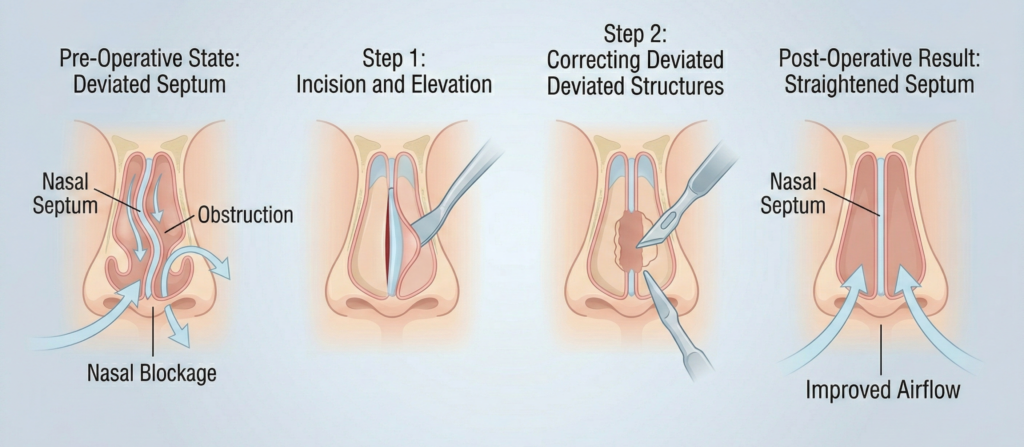
Incision:
The surgeon makes an incision inside your nose (typically inside one nostril) along the septum. No external incisions are made, so there are no visible scars.
Elevation:
The mucous membrane covering the septum is carefully lifted away from the underlying cartilage and bone, creating a pocket that allows access to the deviated structures.
Correction:
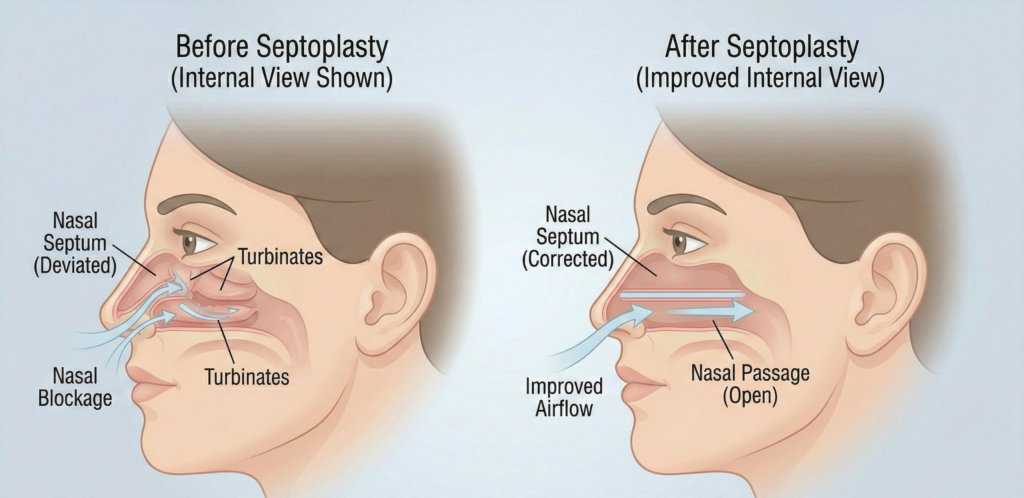
The surgeon removes or repositions the deviated portions of cartilage and bone. Crooked sections may be cut out, straightened and replaced, or shaved down. Spurs are removed. The goal is to create a straight, midline septum while preserving enough structure to support your nose.
Repositioning:
Once corrections are made, the mucous membrane is repositioned over the now-straightened septum.
Closure:
The incision is closed with dissolvable sutures. Splints (thin plastic sheets) are often placed on each side of the septum and sutured in place to support it while healing begins. These splints prevent adhesions between the septum and turbinates.
Packing (Sometimes):
Older techniques used uncomfortable nasal packing (gauze stuffed into nostrils). Modern septoplasty usually avoids this or uses minimal packing, making recovery much more tolerable.
Additional Procedures Often Combined
Turbinate Reduction:
If your inferior turbinates are enlarged, the surgeon may reduce their size during the same procedure. Techniques include partial removal, cauterization, or radiofrequency ablation.
Sinus Surgery:
If you have chronic sinusitis with blocked sinus openings, functional endoscopic sinus surgery (FESS) may be performed simultaneously.
Cosmetic Rhinoplasty:
Many patients combine septoplasty with cosmetic changes, addressing both function and appearance in one surgery. We’ll discuss this more later.
Immediate Post-Operative Period
After surgery, you’ll spend 1 to 2 hours in recovery. You may experience:
- Grogginess from anesthesia
- Nausea (common after anesthesia)
- Nasal congestion and difficulty breathing (due to swelling)
- Mild to moderate discomfort or pressure
- Light bleeding or drainage
Most septoplasty patients go home the same day with pain medication, antibiotics (if prescribed), and detailed aftercare instructions.
Recovery Timeline
First 24 Hours
What to Expect:
Significant congestion requiring mouth breathing, mild to moderate facial pressure or discomfort, some bloody drainage from your nose (normal), fatigue and grogginess from anesthesia, and possible nausea.
What to Do:
Keep your head elevated at 30 to 45 degrees (sleep on 2 to 3 pillows or in a recliner), apply ice packs around (not on) your nose to reduce swelling, take pain medication as prescribed, drink plenty of water, eat soft, cool foods, rest extensively, and change the drip pad under your nose as needed.
Days 2-7: The Splint Period
Physical Symptoms:
Continued congestion (you’ll still be mouth-breathing), mild discomfort or pressure in your nose and face, possible mild bruising or swelling around eyes (less common than with rhinoplasty), dryness and crusting in your nose, and light bleeding or blood-tinged drainage (normal for first few days).
Activity Level:
Rest is important but you can do light activities around the house. Short walks are encouraged to promote circulation. Avoid bending over, heavy lifting (over 10 pounds), straining, vigorous exercise, or blowing your nose. Many people return to desk jobs after 3 to 5 days.
Splint Removal (Day 5-7):
This is a major milestone. The surgeon removes the internal splints, which causes brief discomfort but immediate relief. You can finally breathe through your nose again, though swelling still causes some congestion. The removal feels like a pulling sensation and is over in seconds.
Week 2: Gradual Improvement
Breathing:
You can breathe through your nose now, though it’s not yet at full capacity due to residual swelling. Breathing will continue improving daily as swelling decreases.
Activities:
You can return to most normal activities including work (even physical jobs after week 2). Light cardio exercise like walking or easy biking is usually permitted. Continue avoiding contact sports, heavy lifting, or activities that could result in nasal trauma.
Nasal Care:
Your surgeon may recommend saline spray to keep nasal passages moist and help clear crusting. Gentle cleaning around the nostrils with cotton swabs dampened with hydrogen peroxide helps remove crusts.
Weeks 3-4: Major Improvement
Breathing:
Most patients notice dramatic breathing improvement by week 3 to 4. You can finally get air comfortably through both nostrils. Some mild congestion may remain, especially in the morning.
Activities:
Nearly all activities can be resumed. Moderate exercise including jogging, weightlifting, and swimming is typically cleared. Contact sports may still be restricted until week 6 to 8.
Healing:
Internal incisions are healing well. Crusting decreases significantly. Your nose may still feel slightly stiff or tight inside.
Months 2-3: Continued Refinement
Breathing:
Breathing continues improving as the last bit of internal swelling resolves. By month 3, you’re experiencing the majority of your final breathing improvement.
Sensation:
Any numbness in your nose or upper teeth (common temporarily) usually resolves within 3 months.
Final Healing:
Internal tissues have healed substantially. You’re back to all normal activities without restrictions.
Months 6-12: Final Result
Breathing:
By 6 to 12 months, you’ve achieved your final breathing result. Internal swelling has completely resolved, and the septum has fully stabilized in its new, straight position.
Structural Stability:
The septum is now permanently straight (unless new trauma occurs). The improvement should last indefinitely.
Success Evaluation:
This is when you and your surgeon assess the true success of the procedure. If breathing hasn’t improved significantly by 6 months, investigation is warranted.
Risks and Complications
Common, Minor Issues
Temporary Swelling and Congestion (100%):
Expected for weeks to months. Not a complication, just normal healing.
Nasal Crusting and Dryness:
Common for several weeks. Managed with saline spray and gentle cleaning.
Minor Bleeding:
Light spotting or blood-tinged drainage for the first week is normal. Report heavy bleeding.
Numbness:
Temporary numbness of the nose, upper lip, or front teeth is common and usually resolves within weeks to months.
Mild Asymmetry:
Minor residual deviation or asymmetry can persist, though breathing may still be significantly improved.
Uncommon Complications
Septal Perforation (1-3%):
A hole develops in the septum, either during surgery or during healing. Small perforations may cause no symptoms. Larger ones can cause whistling, crusting, bleeding, or nasal dryness. Repair may be needed.
Septal Hematoma (Rare):
Blood collects between the cartilage and its covering, causing swelling and pressure. Requires urgent drainage to prevent cartilage death.
Infection (1-2%):
Nasal infections are uncommon due to good blood supply. Signs include increasing pain, fever, foul discharge, or worsening swelling after initial improvement.
Persistent Obstruction:
If scar tissue forms, turbinates remain enlarged, or deviation recurs, breathing may not improve as expected. Revision surgery may be needed.
CSF Leak (Very Rare):
Extremely rarely, injury to the skull base can cause cerebrospinal fluid to leak into the nose. This causes clear drainage and requires immediate repair.
Aesthetic Complications
External Appearance Changes:
While rare, septoplasty can sometimes cause subtle external changes like a small dip in the bridge, slight asymmetry, or tip changes if septal support was weakened.
Saddle Nose Deformity (Rare):
Excessive cartilage removal can cause the bridge to collapse. This is rare with modern, conservative techniques.
Tip Changes:
The nasal tip may droop slightly if septal support is reduced. Good surgeons prevent this by preserving structural integrity.
Minimizing Risks
Choose a board-certified ENT or facial plastic surgeon with extensive septoplasty experience, follow all pre-operative and post-operative instructions carefully, don’t smoke before or after surgery, protect your nose from trauma during healing, attend all follow-up appointments, and report any concerning symptoms immediately.
Will Septoplasty Change My Nose’s Appearance?
The Goal Is No Change
Septoplasty is designed to be an internal procedure that doesn’t alter your external appearance. The surgery works entirely inside your nose, straightening the septum without changing your nose’s shape, size, or profile visible from the outside.
Why Sometimes Small Changes Occur
Loss of Support:
If significant cartilage must be removed to straighten the septum, there may be subtle loss of tip support, causing very slight drooping or tip changes. Good surgeons prevent this by preserving key structural cartilage or placing support grafts.
Bridge Changes:
Rarely, straightening a severely deviated septum that was pushing the bridge to one side may allow the bridge to settle slightly differently, making it appear marginally straighter or less twisted.
Swelling:
Temporary swelling during healing (first few months) may make your nose look slightly wider or different. This resolves as swelling decreases.
Improved Symmetry:
If your external nose was slightly crooked due to the internal deviation, straightening the septum may subtly improve external symmetry in a positive way.
When Changes Are Intentional
If you combine septoplasty with rhinoplasty (discussed below), external changes are deliberate and planned. You’re getting both functional improvement and cosmetic enhancement.
Setting Expectations
Most septoplasty patients see no external change whatsoever. Friends and family won’t be able to tell you had surgery by looking at you. Your nose will look the same, just breathe better.
If small external changes concern you, discuss this thoroughly with your surgeon during consultation. They can explain the likelihood based on your specific deviation and surgical plan.
Combining Septoplasty with Rhinoplasty
Why Combine Procedures?
Single Recovery Period:
Addressing both breathing and appearance in one surgery means one recovery instead of two separate recoveries.
Cost Efficiency:
Combined surgery costs less than two separate procedures. You pay one anesthesia fee, one facility fee, and save time off work.
Comprehensive Results:
A surgeon who addresses both form and function can create a nose that both works optimally and looks harmonious with your face.
Insurance Savings:
Insurance typically covers the functional (septoplasty) portion, reducing your total out-of-pocket cost even though you’re paying for the cosmetic components.
What’s Added to Septoplasty
When combining septoplasty with cosmetic rhinoplasty, additional procedures might include:
- Reducing or augmenting the nasal bridge
- Refining the nasal tip
- Narrowing the nose through osteotomies
- Reducing nostril width (alar base reduction)
- Straightening a crooked external appearance
The Combined Procedure
Longer Surgery:
Combined septorhinoplasty takes 2 to 4 hours versus 45 to 90 minutes for septoplasty alone.
More Swelling:
Expect more facial swelling and bruising when external work is added, particularly around the eyes.
External Splint:
You’ll have a rigid splint on the outside of your nose for 5 to 7 days, which isn’t used for septoplasty alone.
Longer Healing:
Full cosmetic healing takes 12 to 18 months, whereas septoplasty breathing improvement is evident within weeks to months.
Insurance Coverage for Combined Procedures
Septoplasty Portion:
Insurance covers the functional septoplasty component if it’s medically necessary and properly documented.
Rhinoplasty Portion:
You pay out-of-pocket for any cosmetic changes. Your surgeon’s office provides a detailed breakdown of what insurance covers versus what you owe.
Typical Scenario:
Insurance might cover $3,000 to $5,000 for the functional portion, and you pay $5,000 to $10,000 for the cosmetic portion, making the total cost $8,000 to $15,000 (compared to $15,000 to $25,000 if done separately).
Having the Conversation
If you’re considering both breathing improvement and cosmetic changes, be upfront during your consultation. Many patients feel shy about mentioning aesthetic concerns when their primary issue is breathing, but surgeons need to know both goals to create the optimal surgical plan.
Ask:
- “Can we address both my breathing and the appearance issues I have?”
- “What would the combined procedure involve?”
- “How does combining them affect recovery and cost?”
- “What will insurance cover versus what I pay out-of-pocket?”
Insurance Coverage for Septoplasty
When Insurance Covers Septoplasty
Medical Necessity:
Septoplasty is covered when it’s medically necessary to treat documented breathing problems caused by a deviated septum.
Required Documentation:
- Clinical exam findings showing significant septal deviation
- Failed conservative treatment (nasal sprays, allergy medications for 3 to 6 months)
- Documentation of symptoms (chronic congestion, breathing difficulty, recurrent sinus infections)
- Sometimes imaging (CT scan) showing the deviation
What’s Typically Covered
The Septoplasty Itself:
Straightening the deviated septum.
Turbinate Reduction:
If medically necessary due to enlarged turbinates blocking airflow.
Functional Sinus Surgery:
If chronic sinusitis accompanies the deviated septum.
What’s Not Covered
Cosmetic Changes:
Any modifications to improve appearance only (hump removal, tip refinement, etc.).
Elective Improvements:
Even if you feel a cosmetic change is important, insurance won’t cover it.
Getting Pre-Authorization
Step 1:
See your primary care doctor or ENT to document breathing problems.
Step 2:
Try conservative treatments as required by your insurance (usually 3 to 6 months of medications).
Step 3:
Get a specialist evaluation from a surgeon who documents the deviated septum and recommends surgery.
Step 4:
Your surgeon’s office submits pre-authorization to insurance with clinical notes, photos, and imaging if available.
Step 5:
Insurance reviews and either approves, denies, or requests more information.
Out-of-Pocket Costs
Even with insurance approval, expect:
- Deductible (varies, typically $500 to $5,000)
- Co-insurance (you pay 10 to 20% of allowed charges)
- Co-pays for office visits
- Total out-of-pocket typically $1,000 to $3,000 depending on your plan
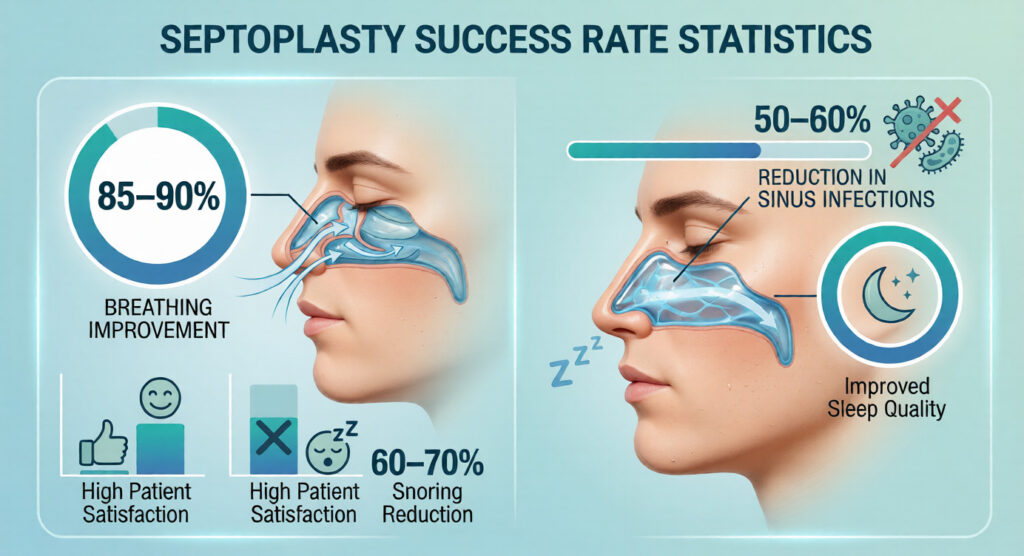
Success Rates and Long-Term Results
Success Rate Statistics
Breathing Improvement:
85 to 90% of patients report significant improvement in nasal breathing after septoplasty.
Patient Satisfaction:
Overall satisfaction rates are high, with most patients saying they would undergo the procedure again and wish they’d done it sooner.
Symptom Resolution:
Specific symptom improvement rates:
- Nasal obstruction: 85-90% improvement
- Snoring: 60-70% reduction
- Recurrent sinus infections: 50-60% reduction
- Sleep quality: 70-80% report better sleep
Objective Measures:
When measured with rhinomanometry or other objective tests, airflow typically improves by 50 to 80% compared to pre-operative measurements.
Factors Affecting Success
Severity of Deviation:
More severe deviations may see more dramatic improvement, but complex deviations may be harder to fully correct.
Coexisting Conditions:
Allergies, turbinate hypertrophy, nasal valve issues, or chronic sinusitis can limit improvement if not addressed simultaneously.
Surgical Technique:
Experienced surgeons achieve better outcomes with fewer complications.
Patient Factors:
Smoking, poor wound healing, or not following post-operative instructions can compromise results.
Realistic Expectations:
Understanding that perfect breathing or 100% improvement may not be achievable helps with satisfaction.
Longevity of Results
Permanent Improvement:
The septum remains straightened indefinitely. The structural correction doesn’t “wear off” or reverse with time (unless new trauma occurs).
Scar Tissue:
In rare cases, internal scar tissue can gradually narrow passages over years, reducing some of the initial improvement. This is uncommon with modern techniques.
New Trauma:
A significant nasal injury after healing can re-deviate the septum, potentially requiring revision septoplasty.
Aging:
Normal aging doesn’t typically cause the septum to become crooked again, though other age-related changes (weakening cartilage, turbinate changes) can affect breathing over decades.
When Revision Is Needed
Revision Rate:
Approximately 5 to 10% of patients eventually seek revision septoplasty due to incomplete correction, recurrent deviation from scar tissue, or new trauma.
Revision Challenges:
Revision septoplasty is more complex due to scar tissue and limited remaining cartilage, but is still often successful.
Final Thoughts: Breathing Better, Living Better
If you’ve been struggling with chronic nasal congestion and breathing difficulty, septoplasty offers hope for dramatic improvement. It’s one of the most consistently successful procedures in medicine, with high patient satisfaction and significant quality-of-life benefits.
The keys to a successful septoplasty are:
- Accurate diagnosis from a qualified specialist
- Proper documentation for insurance approval
- Choosing an experienced surgeon (board-certified ENT or facial plastic surgeon)
- Having realistic expectations about improvement
- Following post-operative care instructions meticulously
- Being patient during the healing process
For many patients, septoplasty is life-changing. The ability to breathe freely through your nose—perhaps for the first time ever—improves sleep, exercise capacity, energy levels, and overall well-being. If you also choose to combine septoplasty with cosmetic improvements, you get the dual benefit of breathing better and looking better.
If chronic nasal obstruction is impacting your quality of life, don’t continue suffering. Consult with a specialist to determine if septoplasty is right for you. The relief of breathing easily through your nose is worth pursuing.