Skip to content
If you’re considering rhinoplasty, you probably have questions about how the procedure works. Whether you’re seeking to improve breathing, enhance facial harmony, or correct a previous injury, understanding the rhinoplasty operation procedure is the first step toward making an informed decision.
Rhinoplasty commonly known as a nose job is one of the most commonly performed cosmetic and functional surgeries worldwide. But what actually happens during the procedure? How long does rhinoplasty surgery take? And what can you realistically expect from the process?
In this comprehensive guide, we’ll walk you through everything you need to know about how rhinoplasty is performed, from your initial consultation through final results. By the end, you’ll have a clear understanding of the surgical techniques, timeline, and what it takes to achieve your desired outcome.
Understanding Rhinoplasty: The Basics
What Is Rhinoplasty?
Rhinoplasty is a surgical procedure that reshapes the nose by modifying bone, cartilage, and soft tissue. The rhinoplasty operation procedure can address both cosmetic concerns and functional issues such as breathing difficulties.
There are two main types of rhinoplasty:
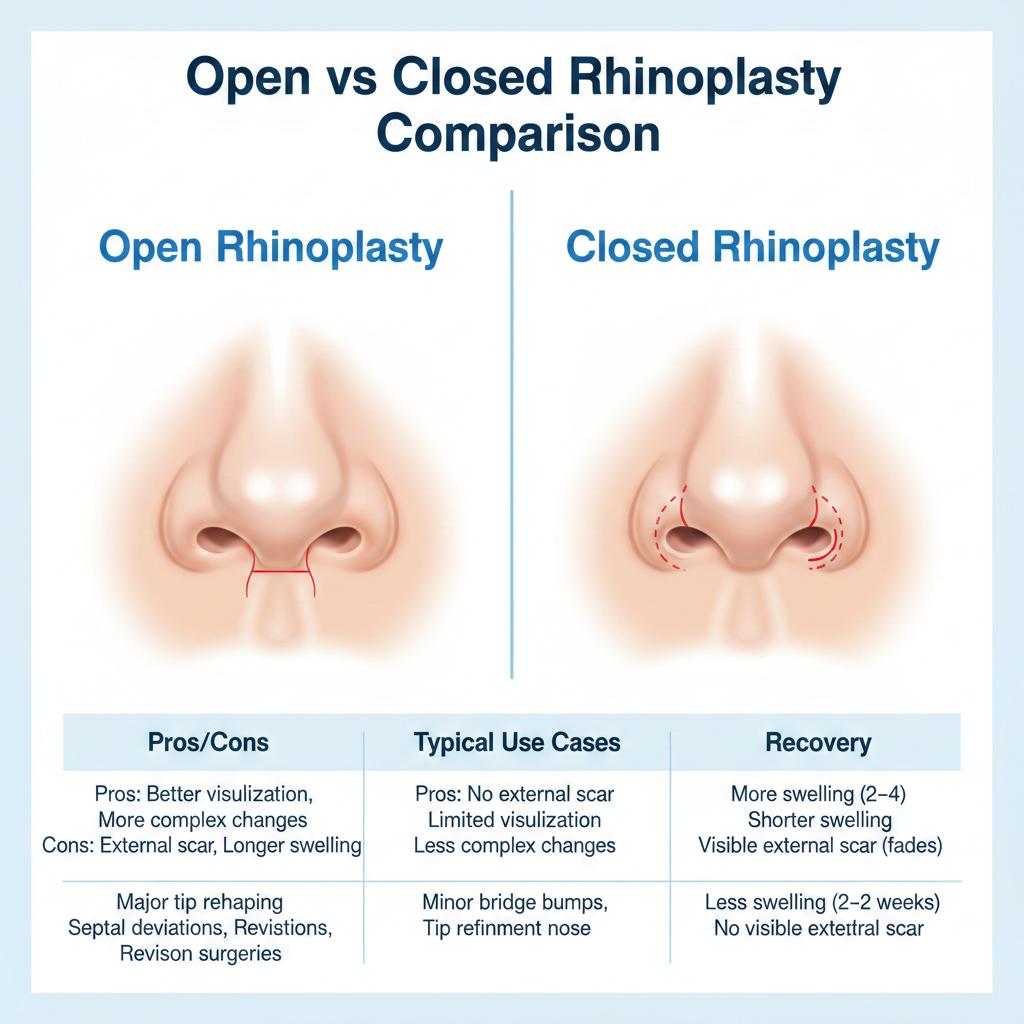
Open Rhinoplasty: The surgeon makes a small incision across the columella (the tissue between the nostrils), allowing complete visibility of the nasal structures. This approach is typically used for complex reshaping.
Closed Rhinoplasty: All incisions are made inside the nostrils, leaving no visible external scars. This technique is often chosen for less extensive modifications.
Additionally, rhinoplasty can be categorized by purpose:
- Cosmetic Rhinoplasty: Focuses on aesthetic improvements to enhance facial harmony
- Functional Rhinoplasty: Corrects structural problems that impair breathing
- Revision Rhinoplasty: Addresses issues from a previous nose surgery
- Ethnic Rhinoplasty: Respects and preserves ethnic features while making refinements
Why People Choose Rhinoplasty
Common reasons for seeking rhinoplasty include:
- Improving the size or shape of the nose in relation to facial balance
- Refining the nasal tip (too bulbous, drooping, or upturned)
- Reducing or increasing nasal size
- Correcting a dorsal hump or depression
- Narrowing the span of the nostrils
- Straightening a crooked nose
- Improving breathing due to structural abnormalities
- Repairing damage from injury or trauma
Understanding rhinoplasty noses and their diverse shapes helps surgeons create natural-looking results that complement each patient’s unique facial features.
The Rhinoplasty Consultation
Your Initial Visit
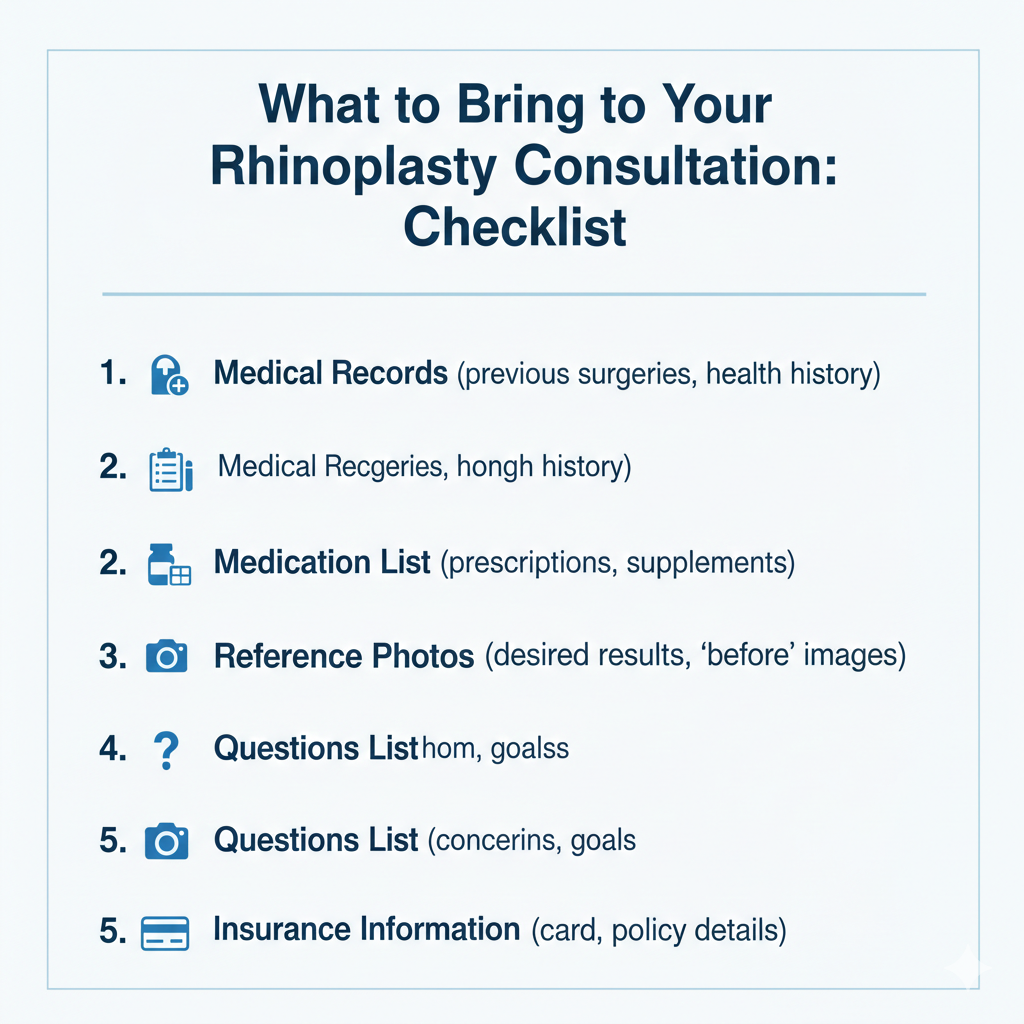
Before any surgery, you’ll meet with a board-certified plastic surgeon or facial plastic surgeon for a detailed consultation. This is where you’ll discuss:
- Your aesthetic goals and functional concerns
- Medical history and current medications
- Previous nasal surgeries or injuries
- Realistic outcomes based on your nasal anatomy
Digital Imaging and Rhinoplasty Media
Modern rhinoplasty consultations often include rhinoplasty media technology such as:
- 3D imaging systems that show potential outcomes
- Computer simulation of post-surgical appearance
- Before and after photo galleries of previous patients with similar nose types
- Video consultations for remote patients
While these tools are helpful, it’s important to remember that computer-generated images are projections, not guarantees. Your surgeon will explain what’s realistically achievable based on your unique bone structure, skin thickness, and healing characteristics.
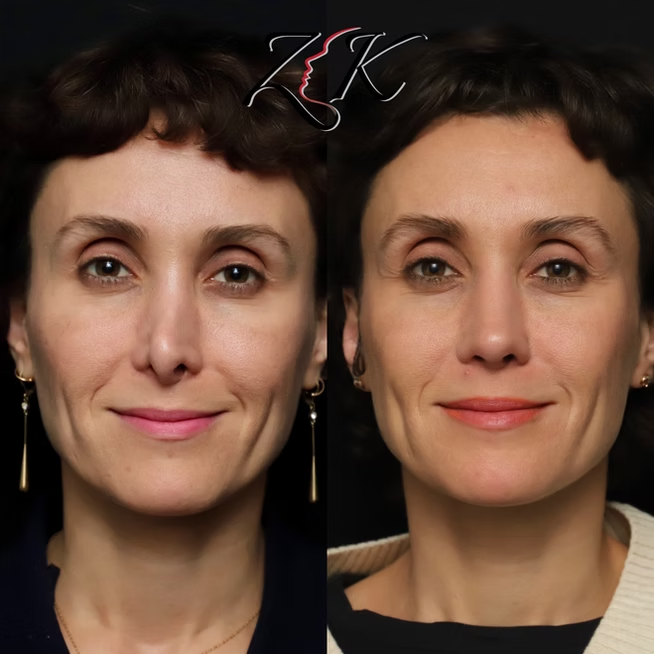
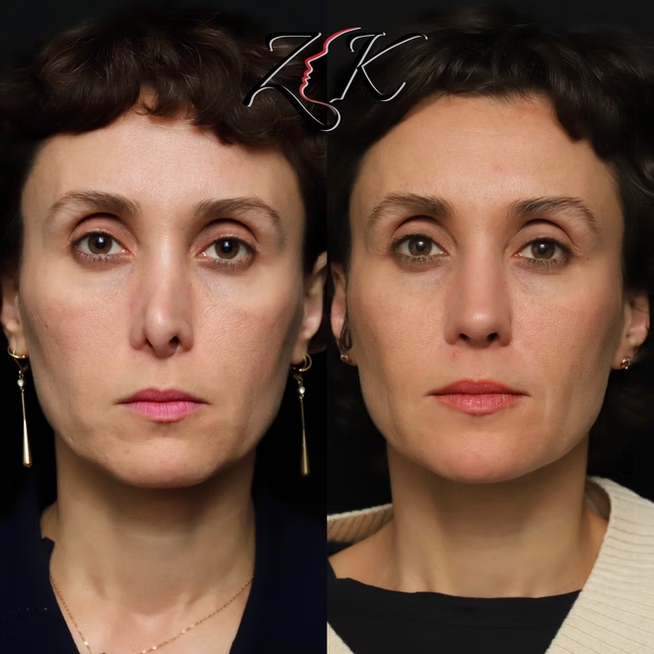
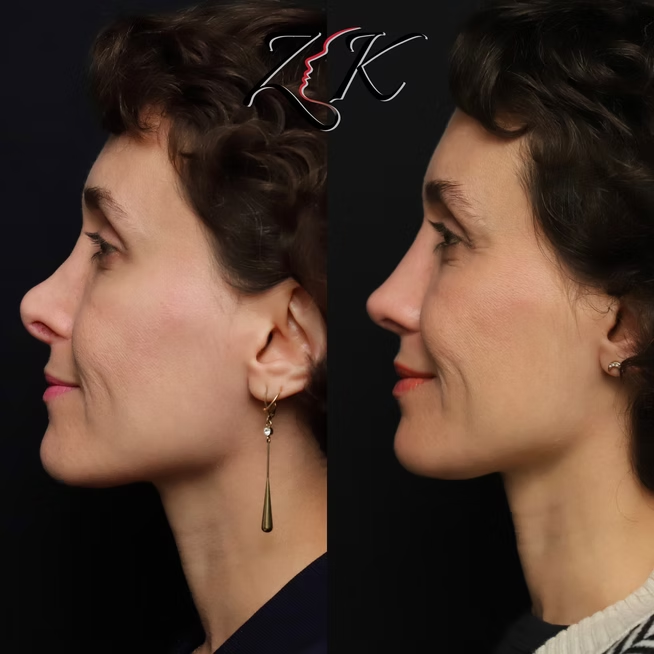
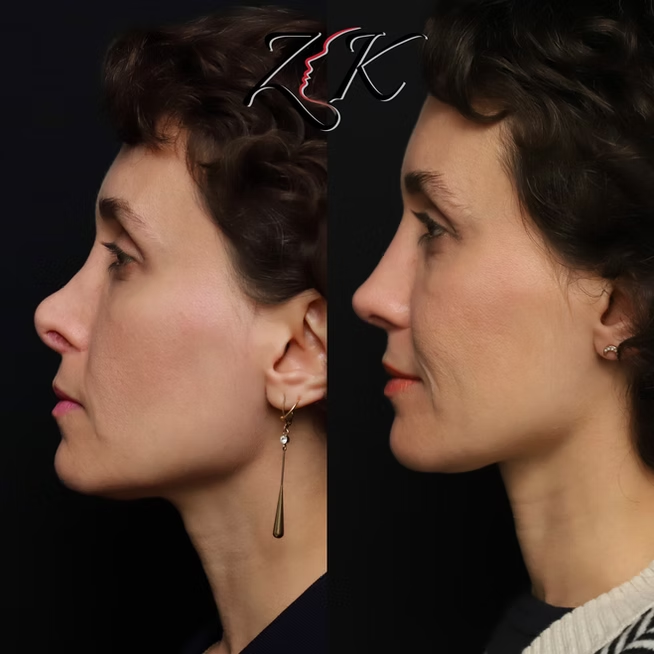
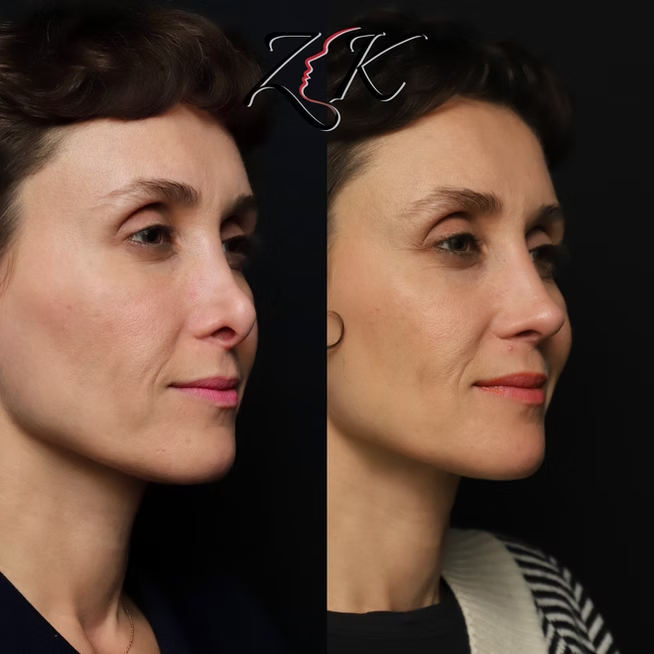
Evaluating Rhinoplasty Noses: Before and After Examples
Reviewing before and after photos of rhinoplasty noses helps set appropriate expectations. Look for patients with similar nasal characteristics to yours:
- Thick skin vs. thin skin (affects refinement visibility)
- Broad bridge vs. narrow bridge
- Large nasal tip vs. small nasal tip
- Ethnic considerations (Asian, African, Middle Eastern, Hispanic rhinoplasty variations)
Your surgeon should show you a diverse portfolio demonstrating their expertise with different nose types and surgical goals.
How Is Rhinoplasty Performed?
Pre-Operative Preparation
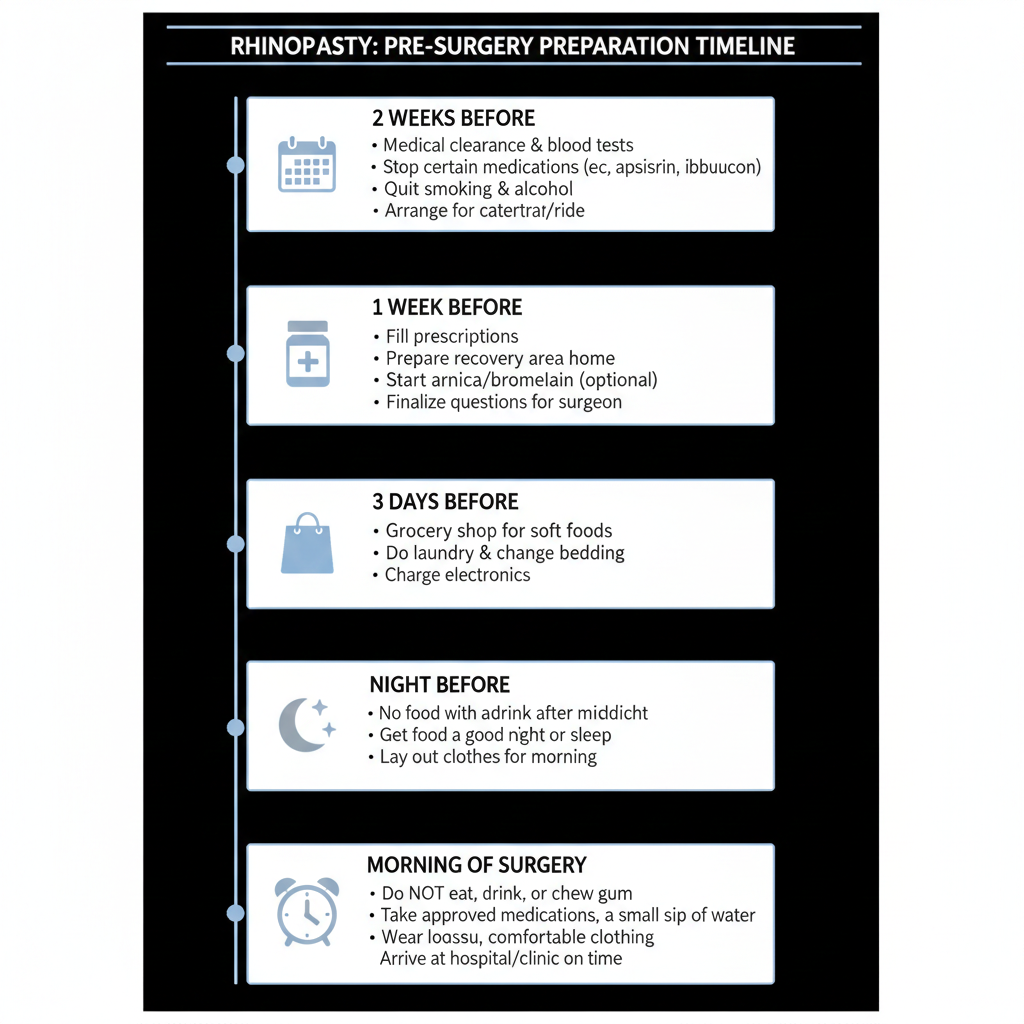
In the weeks leading up to your rhinoplasty operation procedure, you’ll receive specific instructions:
Two weeks before surgery:
- Stop taking blood-thinning medications (aspirin, ibuprofen, certain supplements)
- Quit smoking (nicotine impairs healing)
- Arrange for someone to drive you home and stay with you the first night
- Fill prescriptions for post-operative medications
- Prepare your recovery space with ice packs, comfortable pillows, and easy-to-eat foods
The day of surgery:
- Shower with antibacterial soap
- Remove all jewelry, contact lenses, and makeup
- Wear comfortable, loose clothing that doesn’t pull over your head
- Arrive with an empty stomach (no food or drink after midnight)
Anesthesia Options
Rhinoplasty is typically performed under one of two types of anesthesia:
General Anesthesia: You’ll be completely asleep throughout the procedure. This is the most common choice for rhinoplasty and ensures complete comfort and stillness during surgery.
IV Sedation with Local Anesthesia: You’ll be deeply relaxed but may have some awareness. Local anesthetic is injected to numb the surgical area. This option is sometimes used for minor revisions or less complex procedures.
Your surgeon and anesthesiologist will determine the best option based on the complexity of your rhinoplasty operation procedure and your overall health.
The Surgical Procedure: How Rhinoplasty Is Performed
Now let’s explore exactly how rhinoplasty is performed, step by step.
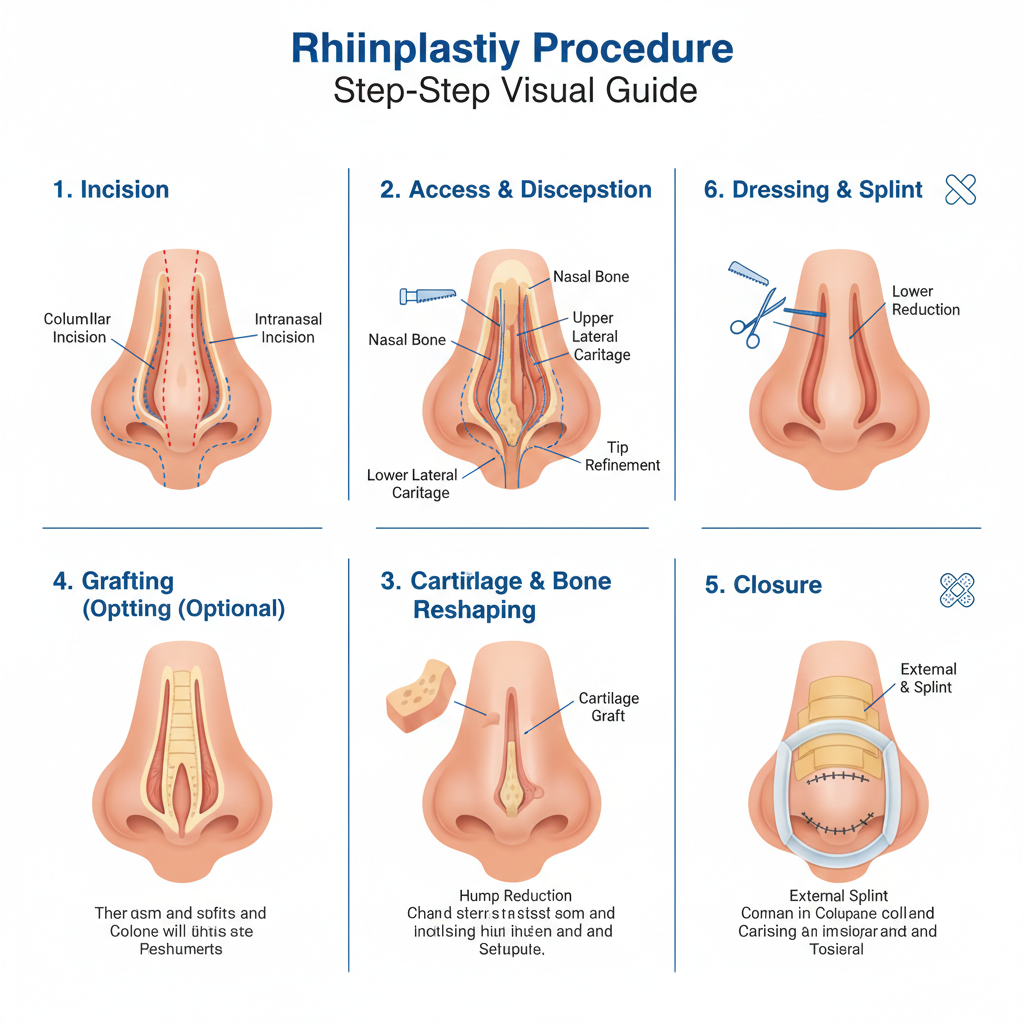
Step 1: Creating the Incisions
Depending on whether you’re having open or closed rhinoplasty, the surgeon will make precise incisions:
For Open Rhinoplasty:
- A small inverted-V incision is made across the columella
- Additional incisions are made inside the nostrils
- The skin is gently lifted to expose the underlying bone and cartilage
For Closed Rhinoplasty:
- All incisions are made inside the nostrils
- The surgeon works through these limited openings
- No external scars result from this approach
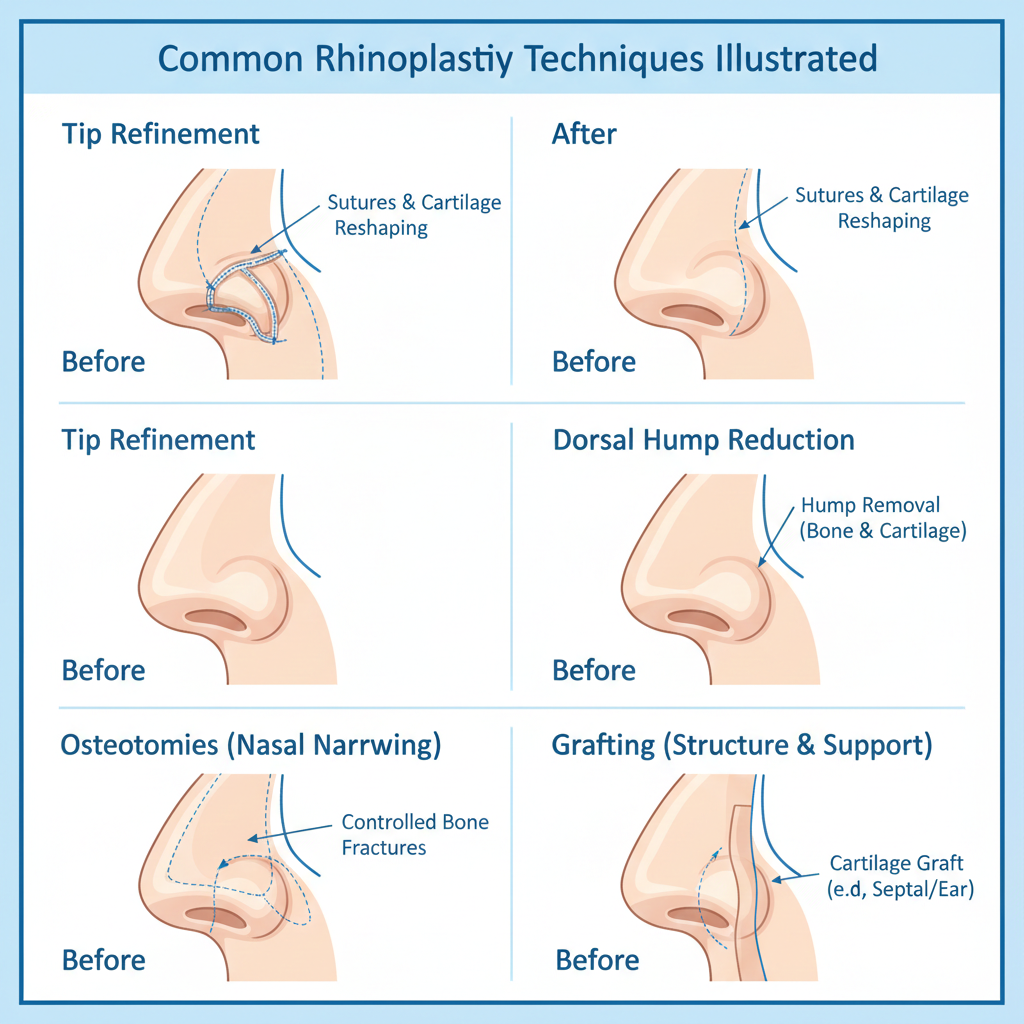
Step 2: Reshaping the Bone and Cartilage
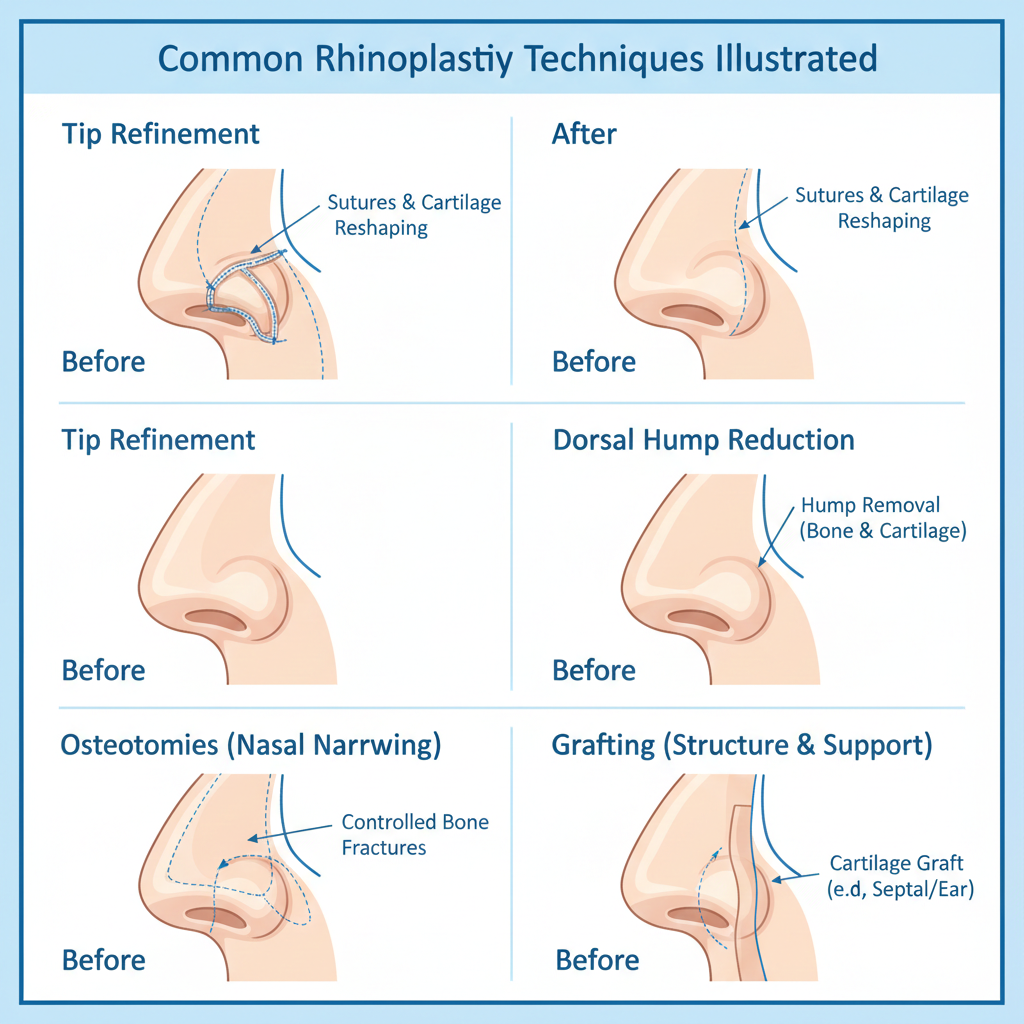
This is the core of how rhinoplasty is performed. The surgeon modifies your nasal structure based on your goals:
Reducing a Dorsal Hump:
- Excess bone and cartilage are carefully removed from the bridge
- The nasal bones may be repositioned to create a straight profile
- Files and rasps smooth the remaining bone
Narrowing a Wide Nose:
- Controlled fractures (osteotomies) are made in the nasal bones
- The bones are repositioned closer together
- This narrows the overall width of the nose
Augmenting a Flat Bridge:
- Cartilage grafts are harvested (usually from the septum)
- Alternative materials like rib cartilage or synthetic implants may be used
- These grafts build up the bridge to the desired height
Refining the Nasal Tip:
- Tip cartilages are reshaped, repositioned, or trimmed
- Sutures hold the cartilages in the new configuration
- Additional grafts may add support or projection
Step 3: Correcting the Septum (If Needed)
If you have a deviated septum causing breathing problems, your surgeon will also perform septoplasty:
- The septum (the wall dividing the nostrils) is straightened
- Excess cartilage or bone is removed
- The septum is repositioned to the midline for improved airflow
This functional component is often combined with cosmetic changes in a single rhinoplasty operation procedure.
Step 4: Closing the Incisions
Once the reshaping is complete:
- The skin and soft tissue are re-draped over the new nasal framework
- Incisions are closed with fine, dissolvable sutures
- For open rhinoplasty, the columellar incision is meticulously closed to minimize scarring
- Internal incisions require no external stitches
Step 5: Splinting and Bandaging
To protect your new nasal structure:
- A nasal splint is applied externally to support the bones
- Soft silicone splints may be placed inside the nostrils
- Tape is applied to minimize swelling
- Sometimes nasal packing is used, though this is less common with modern techniques
How Long Does Rhinoplasty Surgery Take?
One of the most common questions patients ask is: “How long does rhinoplasty surgery take?”
The answer depends on several factors:
Average Duration: Most rhinoplasty procedures take between 1.5 to 3 hours.
Factors That Affect Surgery Length:
- Complexity of changes: Minor refinements take less time than extensive reconstruction
- Open vs. closed approach: Open rhinoplasty typically takes slightly longer due to the additional exposure step
- Functional corrections: Adding septoplasty or turbinate reduction adds 30-60 minutes
- Revision surgery: Secondary rhinoplasty often takes longer due to scar tissue and altered anatomy
- Surgeon experience: Highly experienced surgeons may work more efficiently
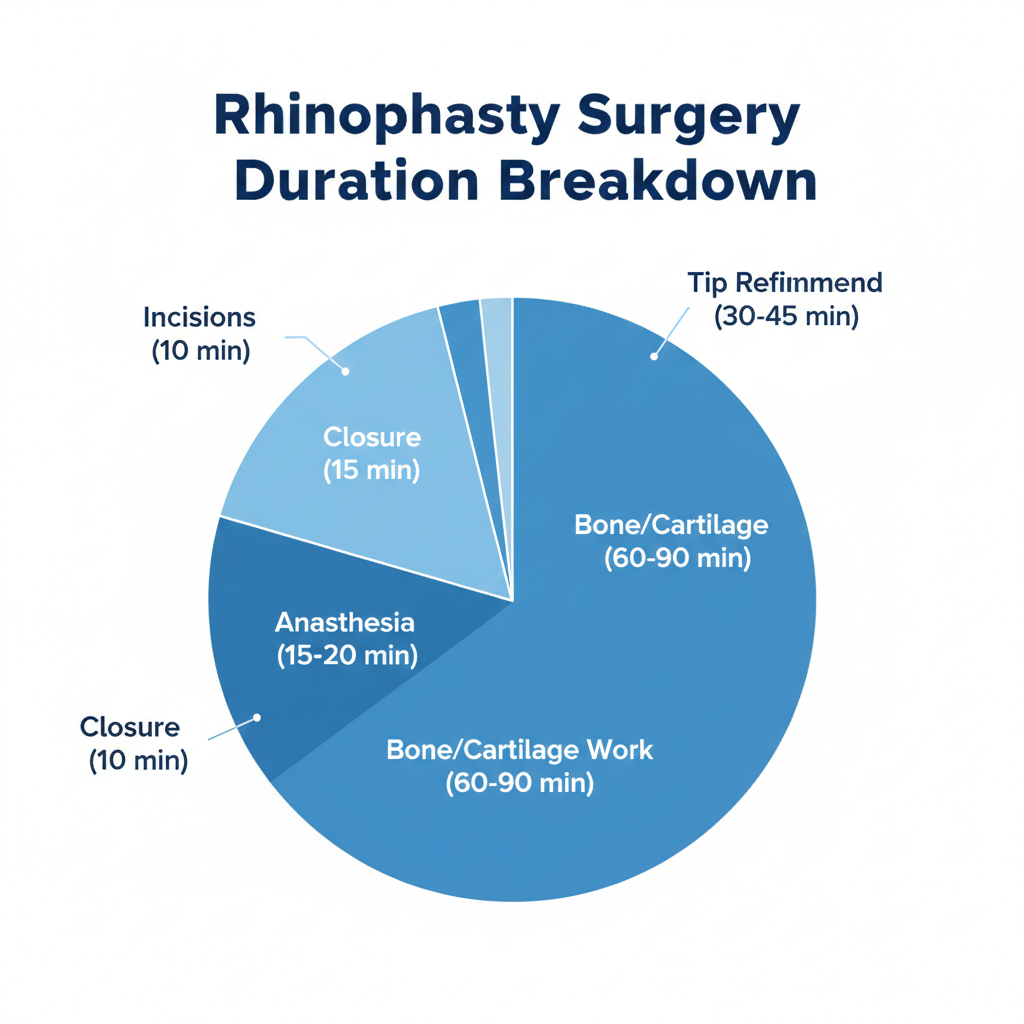
How long is a nose job surgery from start to finish? Including pre-operative preparation and post-operative monitoring, expect to be at the surgical facility for 4-6 hours total, even though the actual rhinoplasty operation procedure is shorter.
Recovery and Healing: What to Expect
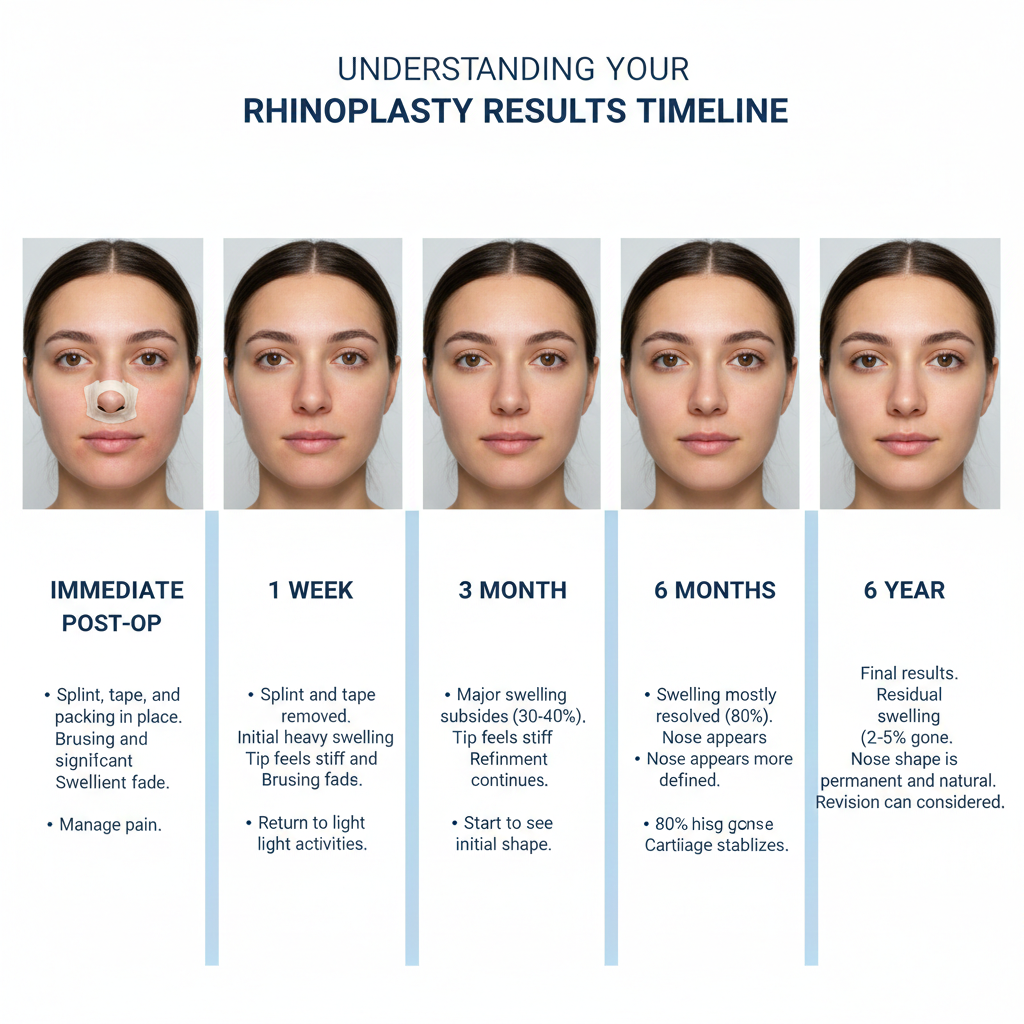
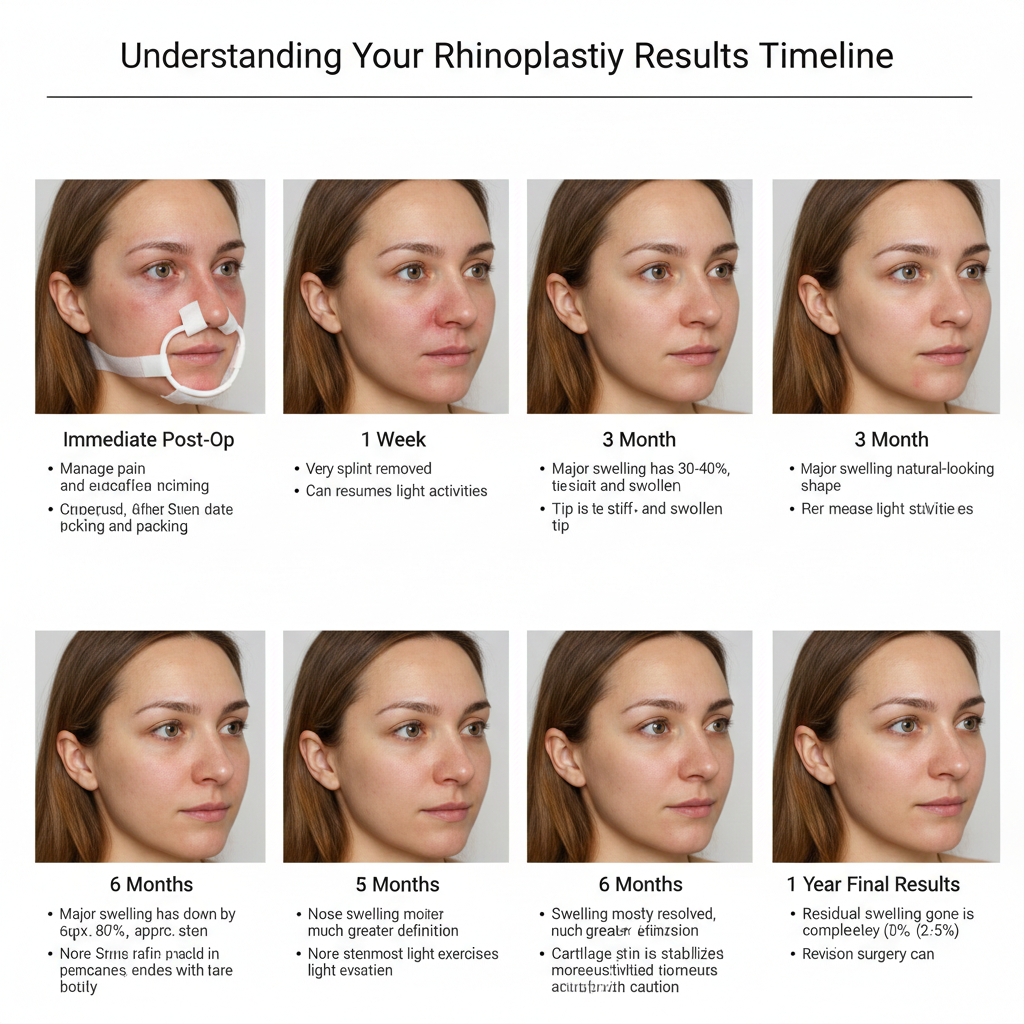
Immediate Post-Operative Period (First 24-48 Hours)
Right after surgery, you’ll be monitored in the recovery room until the anesthesia wears off. You may experience:
- Grogginess and mild disorientation
- Nasal congestion and the need to breathe through your mouth
- Mild to moderate discomfort (usually well-controlled with medication)
- Swelling around the nose and eyes
- Minor bleeding or drainage
Important first-day instructions:
- Keep your head elevated at 30-45 degrees (sleep in a recliner or propped on pillows)
- Apply cold compresses to your cheeks (not directly on the nose)
- Take pain medication as prescribed
- Avoid bending, lifting, or straining
- Don’t blow your nose
Week 1: Splint Removal
Around day 5-7, you’ll return to your surgeon’s office for:
- Splint removal: The external splint comes off, revealing your new nasal shape (though still quite swollen)
- Stitch removal: Any non-dissolvable sutures are taken out
- Cast removal: If a cast was used instead of a splint
- Cleaning: Crusts and dried blood are gently cleaned from the nostrils
Most patients can return to desk work after 1-2 weeks, though you’ll still have noticeable swelling and possibly bruising.
Weeks 2-4: Visible Improvement
- Bruising around the eyes typically resolves by week 2
- Major swelling decreases by 50-60%
- You can gradually resume light activities
- Glasses can be worn with special supports (ask your surgeon)
- Most social swelling is gone, though your nose still looks slightly “puffy”
Months 1-3: Continued Refinement
- The nasal tip begins to take its final shape
- Subtle swelling continues to diminish
- You can resume all normal activities, including exercise
- Most patients feel comfortable in all social situations
- The nose looks natural but may still feel slightly firm
Months 6-12: Final Results
- 90% of swelling has resolved by 6 months
- The remaining 10% gradually disappears over the next 6 months
- Thick-skinned patients may take longer to see final definition
- Your rhinoplasty noses result is now stable and mature
Rhinoplasty Procedure Prospect: What Results Can You Expect?
Realistic Outcomes
Understanding the rhinoplasty procedure prospect—what you can realistically achieve—is crucial for satisfaction.
What rhinoplasty CAN do:
- Reduce or increase overall nasal size
- Change the angle between the nose and upper lip
- Reshape the nasal tip
- Straighten the bridge
- Narrow the nostrils
- Correct asymmetry
- Improve breathing function
- Create better facial balance
What rhinoplasty CANNOT do:
- Make you look like someone else
- Guarantee “perfection” (noses are naturally somewhat asymmetric)
- Change other facial features
- Completely eliminate all asymmetry (faces are naturally asymmetric)
- Guarantee identical results to computer simulations
Success Rates and Satisfaction
- Patient satisfaction rates: 85-90% of rhinoplasty patients are satisfied with their results
- Revision rates: 10-15% of patients undergo revision rhinoplasty, though this doesn’t necessarily indicate dissatisfaction—sometimes minor refinements are desired
- Functional improvement: Over 95% of patients with breathing issues report significant improvement after functional rhinoplasty
Factors That Influence Your Results
Several factors affect your rhinoplasty procedure prospect:
Skin thickness: Thin skin shows refinements more easily; thick skin may obscure subtle changes
Nasal bone strength: Strong bones hold new positions well; weak bones may shift slightly during healing
Age: Younger patients generally heal faster with more predictable results
Overall health: Good health and non-smoking status promote optimal healing
Surgeon skill: Board-certified specialists with extensive rhinoplasty experience produce the most consistent results
Realistic expectations: Patients who understand the possibilities and limitations tend to be more satisfied
Patient Reviews and Testimonials
While not the only factor, patient reviews can provide insight:
- Read reviews on multiple platforms (RealSelf, Google, Healthgrades)
- Look for comments about communication, bedside manner, and results
- Pay attention to how the surgeon handles complications or revisions
- Ask for patient references if you’re comfortable
Hospital Privileges
Ensure your surgeon has operating privileges at an accredited hospital, even if the surgery will be performed at an outpatient facility. This indicates they’ve been vetted by peer physicians.
Conclusion
Understanding how rhinoplasty is performed empowers you to make confident, informed decisions about this life-changing procedure. From the initial consultation through final results, the rhinoplasty operation procedure is a carefully orchestrated journey requiring skill, precision, and patience.
Remember these key takeaways:
- The rhinoplasty procedure typically takes 1.5-3 hours, with open and closed techniques available
- Recovery is gradual, with most social swelling gone by 3-4 weeks but final results taking 12-18 months
- Success depends on choosing an experienced, board-certified surgeon who specializes in rhinoplasty
- Realistic expectations about your rhinoplasty procedure prospect lead to higher satisfaction
- Both cosmetic and functional improvements can be achieved in a single surgery
Whether you’re considering rhinoplasty for aesthetic enhancement, breathing improvement, or both, take the time to research thoroughly, consult with multiple qualified surgeons, and ensure you understand every aspect of how rhinoplasty is performed.
Ready to take the next step? Schedule consultations with board-certified rhinoplasty specialists in your area. Come prepared with questions, reference photos of rhinoplasty noses you admire, and an open mind about what’s achievable for your unique anatomy.
Your journey to improved confidence and nasal function begins with education and now you have the comprehensive knowledge needed to move forward.
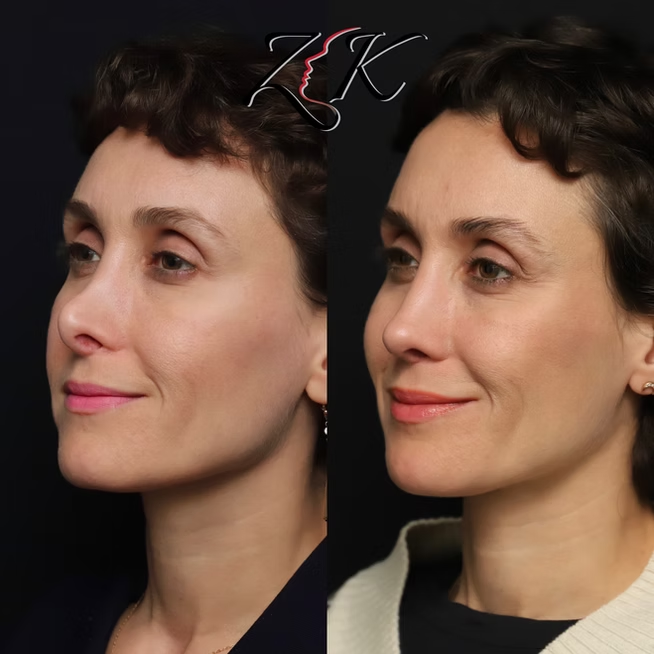
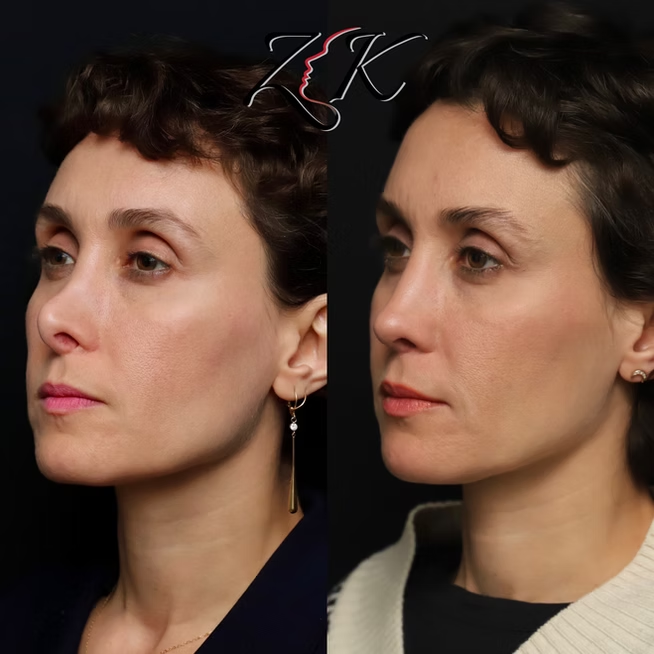
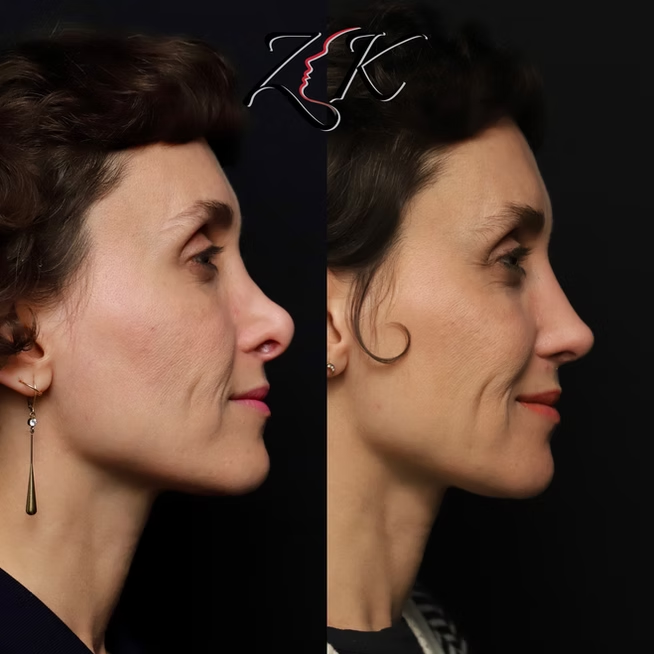
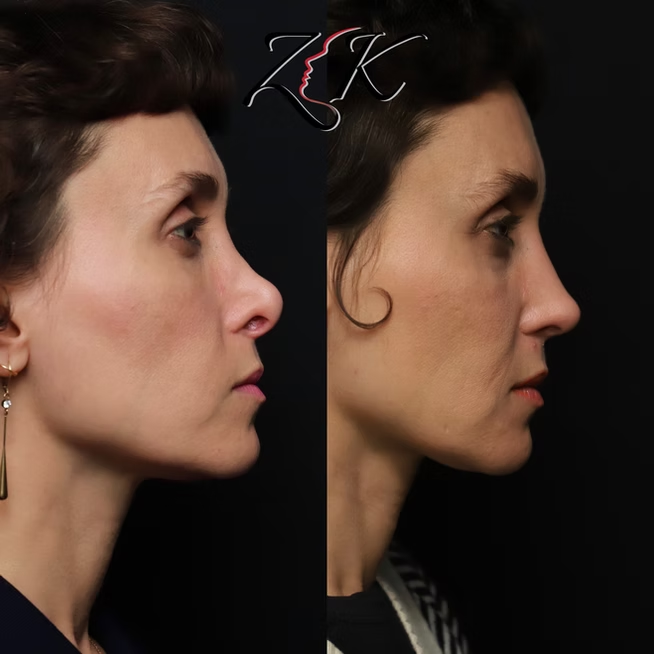
Rhinoplasty Before and After Results: Operated by Dr. Ziad Katrib
For seeing more results just checkout this link: Results Gallery Before and After