 Skip to content
Recovery from rhinoplasty is a journey that requires patience, dedication, and realistic expectations. While the surgery itself takes only a few hours, the healing process unfolds over many months. Understanding what to expect at each stage helps you prepare mentally and physically, recognize normal healing versus complications, and take proper care of your new nose.
This comprehensive guide walks you through every phase of rhinoplasty recovery, from the moment you wake up from surgery to your final result at 12 months and beyond. Whether you’re preparing for surgery or currently in recovery, this timeline will help you know exactly what’s normal, what to do, and when to seek help.
Day-by-Day Recovery: The First Two Weeks
Day 1: Surgery Day & First Night
| What Just Happened | You’ve completed your rhinoplasty surgery and are now in recovery or back home. Your nose is covered with a splint, tape, and possibly internal packing. Mouth breathing, swelling, and grogginess from anesthesia are common. |
|---|---|
| Physical Symptoms | Significant swelling around the eyes, cheeks, and nose. A drip pad may catch drainage. Eye watering, facial pressure, and mild nausea from anesthesia are normal. |
| What to Do | Keep your head elevated at 30–45° using pillows or a recliner. Apply ice packs around (not directly on) your nose for 20 minutes every hour while awake. Take prescribed medication and drink water slowly. |
| What to Eat | Soft, cool foods like yogurt, smoothies, applesauce, pudding, or ice cream. Avoid hot foods or drinks. Avoid straws if upper lip surgery was done. Include protein-rich foods for healing. |
| Sleep Tips | Sleep elevated using pillows or a recliner. Avoid sleeping flat. Place pillows on both sides of your head to prevent rolling onto your face. |
| What’s Normal | Moderate swelling, bruising, light drainage, congestion, pressure sensation, fatigue, and dry mouth from mouth breathing. |
| Call Your Surgeon If | Heavy bleeding that doesn’t stop, fever above 101°F, severe pain not relieved by medication, vision changes, or uneven swelling. |
Day 2: Peak Discomfort Day
| Section | Details |
|---|---|
| What to Expect | Day 2 is often the most uncomfortable part of recovery. Swelling increases throughout the day and typically peaks by evening. Facial puffiness becomes more noticeable, and bruising around the eyes may appear dark purple or black. |
| Physical Changes | Facial swelling is at or near its maximum. Your nose may feel completely blocked, requiring mouth breathing. Puffy eyes and spreading bruising toward the cheeks are common. The drip pad may require frequent changes due to drainage. |
| Pain Level | Pain is usually rated 4–6 out of 10 and feels more like pressure or achiness rather than sharp pain. Many patients compare it to a severe sinus headache. Congestion is often more uncomfortable than pain itself. Take medication on schedule to stay ahead of discomfort. |
| Activity Level | Rest is essential. Take short walks around your home every few hours to prevent blood clots, but otherwise remain reclined. Avoid bending over or lifting items. Ask for help with daily tasks. Limit screen time if it causes eye strain or facial pressure. |
| Swelling Management | Apply ice packs around the nose for 20 minutes on and 40 minutes off while awake. Keep your head elevated even while sitting. Avoid salty foods that increase fluid retention. Supplements like arnica or bromelain may help reduce bruising, but consult your surgeon first. |
Day 3: Turning the Corner
| Section | Details |
|---|---|
| What to Expect | You may start feeling slightly better around Day 3. Swelling remains noticeable but usually stops worsening. You’re becoming more comfortable managing mouth breathing and pain, and the initial discomfort of surgery begins to fade. |
| Physical Improvements | Drainage decreases, requiring fewer drip pad changes. Sleeping in an elevated position becomes easier. Pain is more manageable, and some patients transition to over-the-counter medication or reduced prescription doses. A daily care routine starts to feel more natural. |
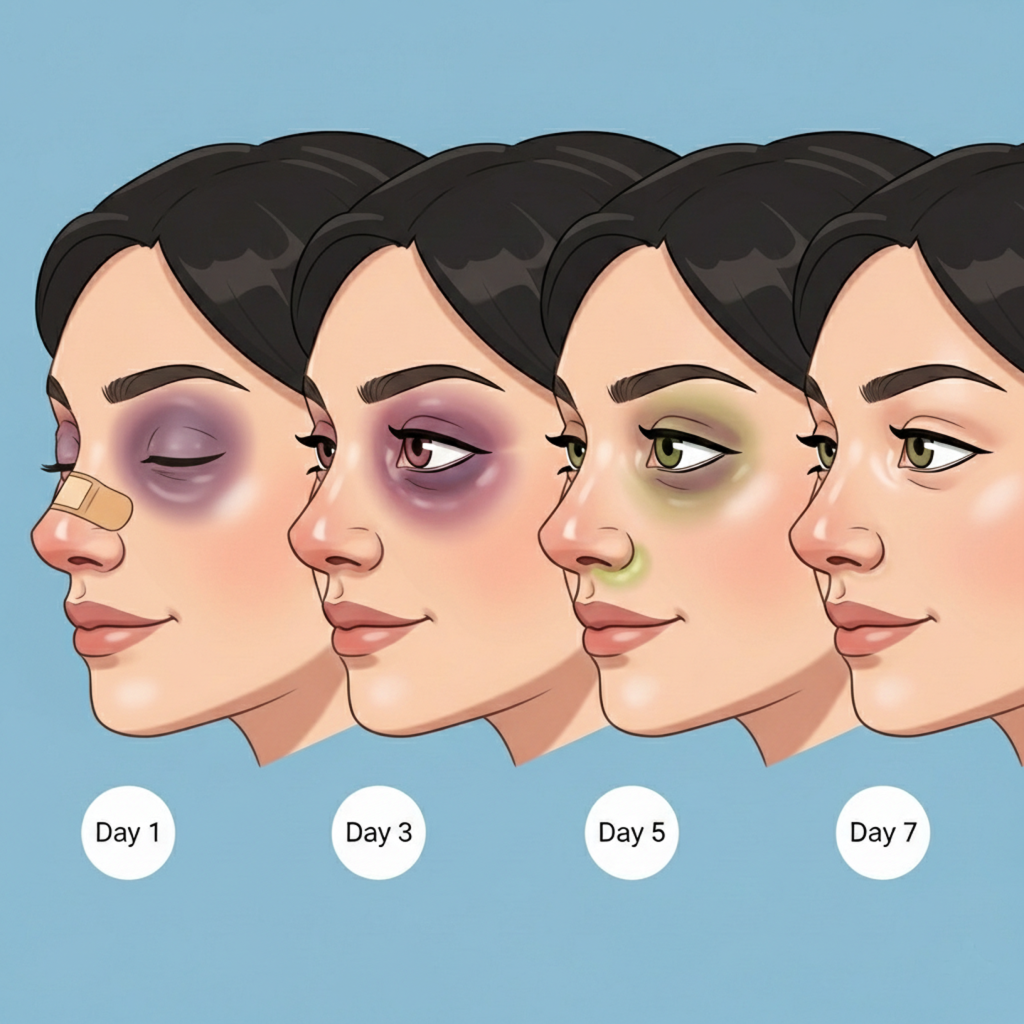
| Bruising Evolution | Bruising is very visible but begins changing color from dark purple to green and yellow as healing progresses. Bruising may spread slightly toward the upper cheeks before gradually fading. |
| Emotional State | Many patients experience “post-surgical blues” between Days 2–4. Swelling and bruising can feel emotionally challenging, leading to doubts or worries about results. These feelings are normal and temporary. Focus on gradual daily improvements rather than expecting immediate results. |
| Care Routine | Continue keeping your head elevated, icing regularly, and taking medication as prescribed. Gently clean around the splint and tape using damp cotton swabs. Change the drip pad as needed and drink plenty of water to support healing and thin nasal secretions. |
Days 4-5: Midweek Milestone
| Section | Details |
|---|---|
| What to Expect | By the midpoint of the first week, you typically feel noticeably better. Swelling has plateaued or started decreasing slightly. Bruising becomes more colorful (purple, green, and yellow) but stops darkening. You begin adjusting to recovery limitations and developing a consistent care routine. |
| Daily Activities | Light activities such as simple meal preparation, gentle showering while keeping the splint dry, and short outdoor walks may be possible. Screen time becomes easier as eye strain improves. Some patients resume light work-from-home tasks, although focus may still be affected by medication or discomfort. |
| Pain Management | Many patients switch from prescription medication to over-the-counter options such as acetaminophen (Tylenol) by Day 4 or 5. Some may still require stronger medication at night. Discomfort usually feels like pressure, tightness, or nasal congestion rather than active pain. |
| Sleeping | Sleep quality improves as your body adapts to elevated positioning. Longer sleep periods become possible. Continue sleeping with your head elevated. A travel neck pillow can help keep your head stable and prevent rolling sideways. |
| Appearance | Swelling and bruising are still noticeable but gradually improving. Facial tightness may make smiling or talking feel stiff, which is normal. Healing continues under the splint even though the nose’s final appearance is not yet visible. |
Days 6-7: Splint Removal Week
| Section | Details |
|---|---|
| What to Expect | You are approaching a major recovery milestone: splint removal, usually between Day 5 and Day 7. Excitement and anticipation are common, but it’s important to remember your nose will still be significantly swollen when the splint comes off. |
| Preparing for Splint Removal | Splint removal is typically quick and painless because it is secured using tape or adhesive rather than stitches. Your surgeon gently removes the splint and tape. Internal splints or packing may also be removed. You may feel mild pulling or pressure but not significant pain. |
| First Look at Your New Nose | Expect swelling, temporary asymmetry, and an appearance far from the final result. The tip may look bulbous or slightly upturned, and the bridge may appear wider than expected. Nostril unevenness is common. At this stage, you are seeing only about 20% of your final outcome. |
| After Splint Removal | Your surgeon may apply supportive taping for another week. Follow cleaning instructions carefully. You can gently wash your face and clean around your nostrils. Nasal saline sprays are often recommended to keep tissues moist and reduce crusting. |
| Breathing | Breathing through your nose may improve but congestion remains due to internal swelling. Avoid forceful nose blowing. If necessary, gently dab with tissue. Some surgeons allow very gentle blowing after the first week, but always follow medical advice. |
| Activity Level | Protect your nose carefully after splint removal. Avoid situations where it could be bumped or injured. Do not bend over to pick up items. Continue sleeping with your head elevated. Shower normally but avoid directing hot water onto your face. |
Week-by-Week Progress: Weeks 2-12
| Timeline | Healing & Appearance | Activities Allowed | Restrictions / Care | Breathing & Sensation | Emotional / Notes |
|---|---|---|---|---|---|
| Week 2 | Bruising fades to yellow/green. About 50–60% swelling reduced. Others may not notice surgery. | Light cardio, walking, makeup use, work or school return. | No heavy lifting, swimming, or nose pressure. Glasses require support. | Internal swelling persists. Saline spray often recommended. | Public confidence improves though impatience begins. |
| Week 3 | Bruising mostly gone. Tip swelling remains. Temporary numbness common. | Daily life resumes. Light jogging and gentle yoga allowed. | Avoid contact sports or facial trauma. | Numb tip may last months. | Social comfort fully returns. |
| Week 4 (1 Month) | About 70% swelling resolved. Shape becoming clearer. | Running, gym workouts, swimming allowed. | Avoid facial trauma or contact sports. | Numbness and itching normal as nerves heal. | Major psychological improvement milestone. |
| Weeks 5–8 | Gradual refinement continues. Bridge improves faster than tip. | Normal activities resume. Sunglasses allowed after week 6. | Contact sports resume later with protection. | Breathing significantly improves by weeks 6–8. | Impatience peaks despite visible improvement. |
| Weeks 9–12 (3 Months) | 80–90% swelling resolved. Natural appearance visible. | Most normal activities safe. | Follow surgeon advice for lingering concerns. | Breathing near optimal. Tingling indicates nerve healing. | Most patients feel healed emotionally. |
| Months 4–6 | 90–95% swelling resolved. Tip definition improves significantly. | All normal activities allowed. | Protect nose from trauma. | Breathing optimal in most patients. | Monthly photos help track subtle progress. |
| Months 6–12 (Final Result) | 95–100% swelling resolved. Tip refinement complete. | No restrictions. | Maintain skincare and avoid trauma. | Full sensation usually returns. Breathing optimal. | High patient satisfaction and final emotional adjustment. |
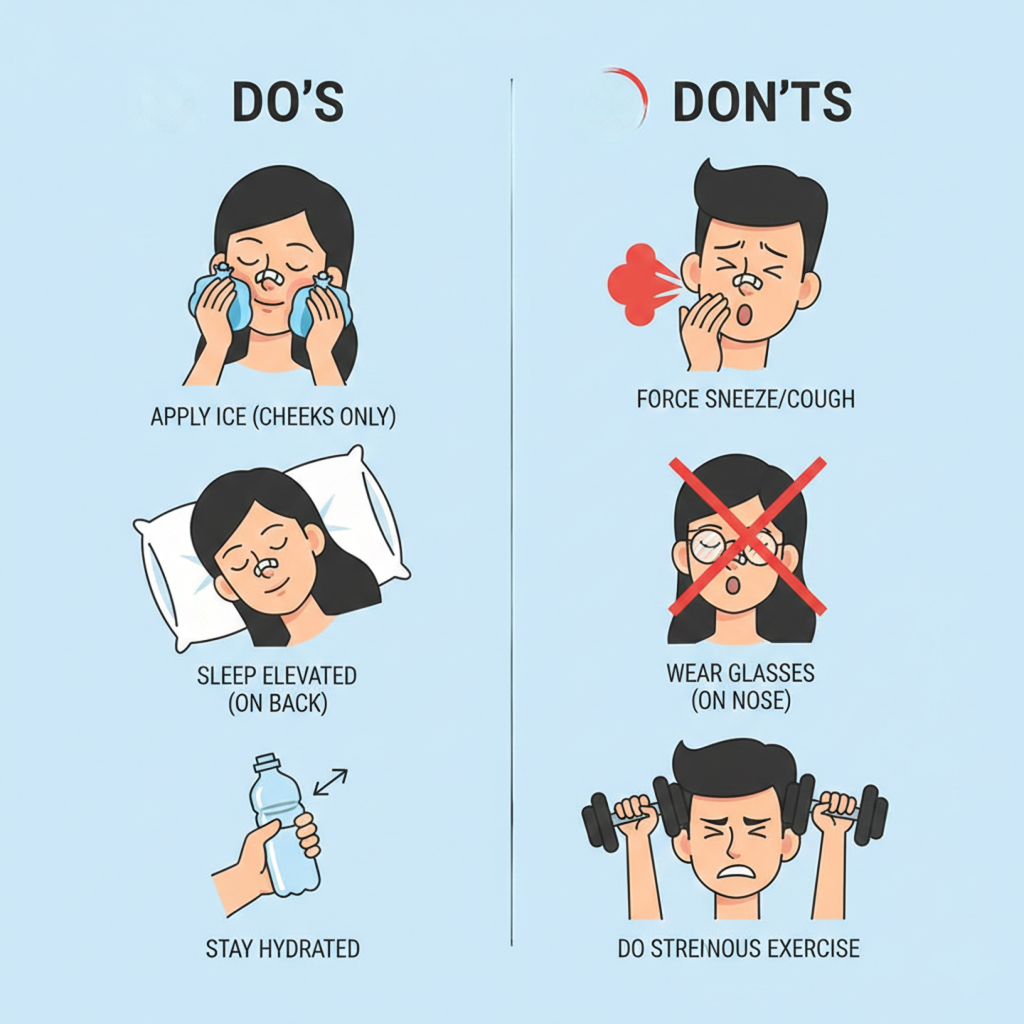
Recovery Do’s and Don’ts
| Recovery Phase | ✅ Do’s | ❌ Don’ts |
|---|---|---|
| First Week | * Keep head elevated 30–45° at all times. * Ice around (not on) nose every hour for first 48–72 hrs. * Take medications as prescribed. * Drink plenty of water for healing and hydration. * Eat soft protein-rich foods (smoothies, yogurt, eggs). * Change drip pad as needed. * Take short indoor walks to improve circulation. * Clean gently around splint using damp cotton swabs. | * Don’t blow your nose. * Don’t bend over or strain. * Don’t lift heavy objects (5–10 lbs+). * Don’t smoke or stay near smoke. * Avoid alcohol for at least two weeks. * Don’t sleep flat or sideways. * Don’t touch or bump your nose. * Avoid aspirin or NSAIDs unless approved. * Don’t wear glasses resting on nose. * Avoid sun exposure without SPF 30+ sunscreen. |
| Weeks 2–4 | * Gradually increase activity as cleared. * Wear sunscreen outdoors. * Continue elevated sleep if swelling persists. * Be patient with appearance changes. * Attend follow-up appointments. * Use saline spray if recommended. | * Avoid contact sports or high-impact exercise. * Don’t swim or submerge face underwater. * Avoid facials or microneedling (6 weeks minimum). * Don’t wear sunglasses on nose bridge. * Don’t compare healing with others. * Don’t panic about temporary asymmetry. |
| Long-Term (Months 1–12) | * Take monthly progress photos. * Protect nose from trauma. * Maintain realistic healing expectations. * Contact surgeon if concerns arise. * Resume normal life once cleared. | * Don’t massage or manipulate nose without approval. * Don’t consider revision surgery before 12 months. * Don’t obsess over minor asymmetry. * Don’t skip sun protection. |
Managing Discomfort: Practical Tips
Pain Management
Medication Strategy
Take prescribed pain medication on schedule for the first 48 to 72 hours, even if you don’t feel severe pain. This prevents pain from becoming overwhelming. After day 3, many patients transition to over-the-counter acetaminophen (Tylenol). Avoid aspirin and ibuprofen unless approved by your surgeon, as these can increase bleeding.
Non-Medication Relief
Ice packs around your eyes and cheeks provide significant relief during the first week. Cool compresses on your forehead can help with headache-like pressure. Some patients find that lying in a quiet, dark room helps when pain feels overwhelming. Distraction through movies, audiobooks, or gentle music can make discomfort more bearable.
Swelling Management
Elevation is Everything
Keep your head elevated above your heart at all times during the first week. Use 2 to 3 pillows or sleep in a recliner. Even when sitting, recline rather than sitting completely upright. Lying flat causes blood to pool in your face, dramatically increasing swelling.
Ice Application
During the first 72 hours, ice around your nose and eyes for 20 minutes every hour while awake. Use frozen peas or gel ice packs wrapped in a thin cloth. Don’t apply ice directly to skin or on the splint itself. After day 3, continue icing as needed for comfort and swelling control.
Dietary Considerations
Avoid salty foods that promote fluid retention and increase swelling. Don’t drink alcohol for at least two weeks, as it increases swelling. Stay well-hydrated with water. Some surgeons recommend pineapple (contains bromelain) and arnica supplements to reduce swelling, but always check first.
Congestion Management
Mouth Breathing Support
Your nose will be completely congested for at least a week, requiring mouth breathing. This causes dry mouth and throat. Keep water nearby at all times. Use lip balm frequently. Run a humidifier in your room to keep air moist. Breathe through your mouth slowly and gently rather than gasping.
Nasal Care
Use saline nasal spray as recommended by your surgeon to keep nasal passages moist. Don’t pick at crusts or dried blood. Clean around nostrils gently with damp cotton swabs. If you must clear your nose, dab with tissue rather than blowing forcefully.
Sleep Challenges
Positioning
Sleeping elevated on your back is uncomfortable if you’re not used to it. Use a travel neck pillow to prevent rolling sideways. Place regular pillows on either side of your head as barriers. A wedge pillow provides consistent elevation. Some patients sleep in a recliner for the first week.
Sleep Aids
If sleep is very difficult, ask your surgeon about taking melatonin or a mild sleep aid. Avoid alcohol-based sleep aids. Maintain a cool room temperature, as warmth can increase swelling. White noise or calming music can help you relax despite discomfort.
Emotional Management
The Post-Op Blues
Feeling depressed, anxious, or regretful in the first week is very common. Seeing yourself swollen and bruised is emotionally difficult. These feelings almost always pass as healing progresses. Focus on small daily improvements rather than the final result.
Support System
Have a trusted friend or family member check on you daily during the first week. Talking about your concerns helps. Join online rhinoplasty support groups where you can see others’ recovery journeys and realize your experience is normal.
Perspective Maintenance
Take daily photos from the same angles. When you feel discouraged, compare today to day 1 to see how far you’ve come. Set small goals (getting through today, reaching splint removal, completing week 1) rather than focusing on the distant final result.
When to Contact Your Surgeon
Call Immediately (Emergency Situations)
Severe bleeding that doesn’t stop after 10 to 15 minutes of gentle pressure. Some oozing is normal, but heavy, persistent bleeding requires attention.
Fever over 101°F (38.3°C) could indicate infection. Low-grade fever (99 to 100°F) is common in the first 24 to 48 hours, but anything higher needs evaluation.
Severe pain not controlled by prescribed medication. While discomfort is expected, unbearable pain is not normal and could indicate a complication.
Vision changes including double vision, blurred vision, or loss of vision in one or both eyes. This is rare but requires immediate attention.
Chest pain or difficulty breathing (not related to nasal congestion). This could indicate a blood clot in the lungs, which is a medical emergency. Call 911.
Signs of infection including increasing redness, warmth, pus or foul-smelling discharge, or red streaks extending from the surgical site.
Sudden severe headache or extreme dizziness that doesn’t improve with rest.
Call Within 24 Hours (Concerning Symptoms)
One-sided swelling that’s significantly worse than the other side, especially if accompanied by increased warmth or redness.
Persistent nausea or vomiting beyond the first 12 hours that prevents you from staying hydrated or taking medications.
Increasing pain after day 3 when it should be improving. Pain that gets worse rather than better suggests a problem.
Unusual or foul-smelling drainage from your nose or incisions. Some drainage is normal, but odor or green/yellow pus is not.
Inability to urinate for 8+ hours after surgery, which could indicate urinary retention from anesthesia or pain medications.
Splint falling off or becoming loose before your scheduled removal appointment.
Extreme anxiety or depression that feels unmanageable. Mental health concerns related to surgery should be addressed.
Call During Office Hours (Non-Urgent Concerns)
Expected but bothersome symptoms like more swelling than you anticipated, concerns about bruising extent, or questions about normal healing.
Medication side effects like constipation from pain medications, stomach upset, or drowsiness affecting your daily function.
Questions about care instructions if something was unclear or you forgot part of your post-op instructions.
Concerns about appearance during healing, like asymmetry, concerns about your nose shape, or feeling your result doesn’t match expectations. These should be discussed, but they’re not emergencies.
Breathing not improving as expected by week 6 to 8 if you had functional work performed.
Scheduling concerns like needing to reschedule a follow-up appointment or clarify when you can return to specific activities.
Normal Symptoms That Don’t Require a Call
Significant swelling and bruising in the first two weeks. This is expected and doesn’t require contact unless one-sided or extreme.
Numbness in the nose, tip, or upper lip. This is normal and resolves over months.
Feeling congested and unable to breathe well through your nose for several weeks. Internal swelling takes time to resolve.
Minor asymmetry or irregularities in appearance during the first 6 to 12 months. Healing is asymmetric.
Occasional minor bleeding or pink-tinged drainage in the first 48 to 72 hours.
Difficulty sleeping due to congestion and the need to stay elevated.
Feeling emotional, anxious, or experiencing mood swings during recovery. Post-surgical blues are very common.
Itching around the nose or incisions as they heal. This indicates nerve regeneration.
Recovery Supplies Checklist
Before Surgery Day
- Wedge pillow or multiple regular pillows for elevated sleeping
- Ice packs or frozen peas (at least 4 so you can rotate them)
- Gauze pads for drip pad changes
- Clean washcloths for gentle cleaning
- Saline spray (if recommended by surgeon)
- Humidifier for your bedroom
- Lip balm for dry lips from mouth breathing
- Straws (if allowed by your surgeon)
- Comfortable button-up or zip-up shirts (nothing pulled over head)
- Healthy snacks and easy meals prepared in advance
- Entertainment like books, audiobooks, movies, puzzles
Medications and Supplements
- Prescribed pain medication filled before surgery
- Prescribed antibiotics if provided
- Anti-nausea medication if prescribed
- Stool softener (pain medication causes constipation)
- Acetaminophen (Tylenol) for later in recovery
- Arnica montana or bromelain (if approved by surgeon)
Comfort Items
- Soft foods like yogurt, applesauce, smoothie ingredients, soups
- Water bottles to keep nearby
- Tissues (soft, lotion-infused variety)
- Face wipes for easy cleaning when showering is difficult
- Comfortable loose clothing
- Phone charger with long cord
- Notebook to track medications, symptoms, and questions for surgeon
Final Thoughts: Trust the Process
Rhinoplasty recovery is a marathon, not a sprint. The journey from surgery day to final result spans a full year, with the most dramatic changes happening in the first three months. Understanding what’s normal at each stage helps you stay patient and avoid unnecessary anxiety.
Remember that everyone heals differently. Your timeline may be faster or slower than others based on your skin type, the extent of your surgery, your age, and your overall health. Avoid comparing your week 2 to someone else’s week 2. Focus on your own progress.
The discomfort of the first week fades quickly from memory. The inconvenience of the first month becomes insignificant. But the confidence and satisfaction from your new nose last a lifetime. Trust your surgeon, follow instructions carefully, and give your body the time it needs to heal properly.
Your nose is worth the wait.