
TL;DR
Dorsal hump removal rhinoplasty reshapes the bridge of the nose, but the reduction itself is only half the procedure. Without proper structural support afterward, the profile can collapse or develop new irregularities. This guide covers what a dorsal hump is, how removal works, and why aftercare structure matters as much as the reduction.
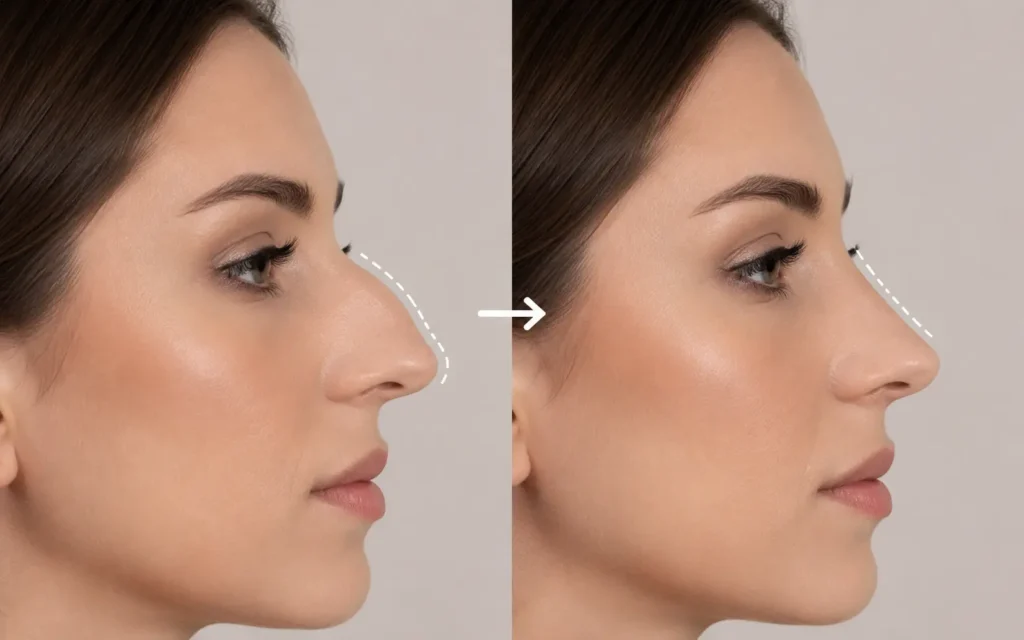
Search any rhinoplasty results photo gallery and the before and after most people stop scrolling on is the profile shot. The bump is gone, the bridge is smooth, the profile finally looks balanced.
What most people do not see in that photo is everything that happened after the bump came off. Dorsal hump removal rhinoplasty is deceptively simple to describe and genuinely difficult to execute well, because removing bone and cartilage is the easy part. Keeping the nose structurally sound afterward is where surgical skill actually shows.
What Is a Dorsal Hump
A dorsal hump is a raised area along the bridge of the nose, made up of both bone and cartilage, that creates a convex profile rather than a straight or gently sloped one.
Nose hump removal surgery is one of the most commonly requested changes in rhinoplasty consultations, and it is frequently paired with tip refinement to keep the entire profile in proportion.
How Removal Works
Nasal bridge reduction involves carefully removing the excess bone and cartilage that make up the hump, using techniques that shave, rasp, or selectively remove tissue depending on the size and composition of the hump.
Rhinoplasty dorsal hump correction sounds like a single motion, but it actually requires precise, incremental work. Removing too much creates new problems, and removing too little leaves the original complaint only partially addressed.
Why Structural Support Is Critical
This is the part of dorsal reduction technique that separates an experienced rhinoplasty specialist from a surgeon who only performs the procedure occasionally.
Removing a dorsal hump can leave whats called an open roof deformity, a gap in the bony structure of the bridge, if the surrounding bones are not properly repositioned afterward. Left uncorrected, this can create a widened, irregular bridge, sometimes called a rocker deformity.
- Osteotomies, controlled bone cuts, are often used to close the open roof left behind after hump removal
- Spreader grafts may be placed to preserve internal airway width and prevent a pinched appearance
- Profile rhinoplasty hump cases with larger reductions typically require more extensive structural support to maintain a stable result
Results After Dorsal Reduction
A well executed nasal bump correction produces a straight, proportional profile that still functions properly for breathing, since structural support techniques also help preserve internal airway space.
The research on rhinoplasty patient satisfaction consistently identifies a residual dorsal hump as one of the most common reasons for postsurgical dissatisfaction among both men and women, according to a social media analysis published in Aesthetic Surgery Journal, underscoring how important complete and precise reduction is to patient happiness with the outcome.
Recovery After Hump Surgery
Recovery generally follows the same timeline as standard rhinoplasty, with the most visible swelling resolving over the first several weeks and finer refinement continuing for months afterward, consistent with typical rhinoplasty swelling stages.
Because the bridge involves both bone and cartilage, some patients notice mild firmness along the bridge for a period after surgery as the tissue settles into its new structure.
Conclusion
A dorsal hump is one of the most visually obvious things a nose can have, and it is also one of the most commonly and successfully corrected. The reduction itself is not the hard part. Keeping the bridge structurally sound, properly supported, and proportional to the rest of the face afterward is where real surgical judgment comes in. This is exactly why a residual or partially treated hump remains one of the most frequent sources of patient dissatisfaction nationally, and it is almost always a planning and technique issue rather than an inevitable outcome.
Dr. Ziad Katrib treats structural support as a mandatory part of every dorsal hump removal rhinoplasty, not an optional add on, because a smooth bridge that collapses or widens over time is not actually a successful result. If a bump on your bridge has bothered you for years, the fix is more precise and more permanent than most patients expect, provided it is done by a surgeon who plans for what happens after the bump comes off, not just the moment it does.
The consultation is $300, available virtually or in person. Call 502-445-9311 or visit ZKNoses.com to book yours.
Frequently Asked Questions
Will removing my dorsal hump make my nose look too flat?
Not if the reduction is planned proportionally to the rest of your face. A skilled surgeon aims for balance, not maximum flatness, during dorsal hump removal rhinoplasty.
What is an open roof deformity and should I worry about it?
It refers to a bony gap that can be left after hump reduction if the surrounding bones are not repositioned. It is a well known risk that experienced surgeons specifically plan to avoid through controlled bone work.
Can a small bump be fixed without surgery?
Non surgical filler based approaches can sometimes camouflage a very small irregularity, but they cannot actually remove bone or cartilage the way dorsal hump removal rhinoplasty does.
How soon will I see my final profile after surgery?
The general shape is visible within a couple of months, though the most subtle refinement along the bridge can continue for up to a year.