
TL;DR
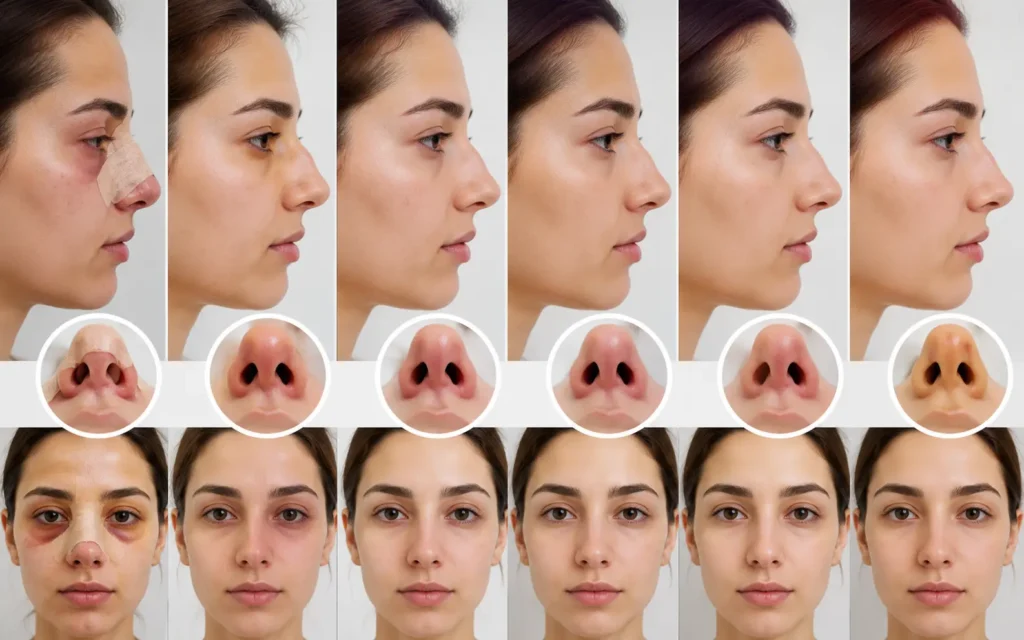
Rhinoplasty swelling stages follow a predictable but slow pattern, with the majority of visible swelling resolving in the first few months and the final, subtle refinement continuing for up to a year. This guide breaks down what to expect week by week and how to manage swelling along the way.
Two weeks after surgery, you take off the splint expecting the finished result. Instead you see a nose that looks bigger than you remember, and the panic sets in immediately.
This moment catches almost every rhinoplasty patient off guard, and it should not, because it is completely normal. Swelling after rhinoplasty does not disappear on a neat schedule. It moves through stages, and understanding those stages ahead of time changes panic into patience.
Why Rhinoplasty Causes Significant Swelling
The nose has thin skin stretched over a tightly packed structure of bone, cartilage, and soft tissue, all of which gets manipulated during surgery. That combination is exactly why swelling here lingers longer than it does after most other procedures.
According to industry data on rhinoplasty outcomes, the median time to reach the final aesthetic result after rhinoplasty is around twelve months post operation, which surprises most first time patients who expect a matter of weeks.
Week 1
This is the most dramatic phase of the rhinoplasty swelling timeline. Bruising around the eyes, significant facial puffiness, and a splint holding everything in place are all standard.
- Sleep with your head elevated to reduce fluid buildup
- Cold compresses around the eyes, never directly on the nose
- Expect the splint removed around day five to seven
Weeks 2 to 4
This is the stage that causes the most emotional whiplash. Swelling week by week nose job progress becomes visible, but slowly and unevenly.
Most bruising resolves during this window. The nose still looks noticeably swollen, particularly at the tip, and many patients feel discouraged here even though healing is on track.
Months 2 to 3: Studio Ready
By this point, post op swelling rhinoplasty has reduced enough that most patients feel comfortable in photos and social settings again. This is often referred to informally as being studio ready, since the shape is recognizable and presentable even though fine refinement continues underneath.
Month 6 and Beyond
The tip swelling rhinoplasty patients notice most stubbornly is usually gone or nearly gone by this stage. The nasal tip carries the thickest skin and the least blood supply of any part of the nose, which is exactly why it is always the last area to finish refining.
How Long Until Final Results
The rhinoplasty 6 months result is close to final for most patients, but true completion, especially for thicker skin types, can extend to the twelve month mark referenced earlier. Patience here is not optional, it is simply part of the process.
Tips for Managing Swelling
- Limit sodium intake in the first few weeks to reduce fluid retention
- Avoid strenuous exercise until your surgeon clears you
- Protect the nose from sun exposure, which can prolong swelling and discoloration
- Attend every follow up so your surgeon can track your specific healing curve
Conclusion
The hardest part of recovering from rhinoplasty is rarely the physical discomfort. It is the psychological toll of staring at a swollen nose in the mirror for weeks and wondering if this is the permanent result. It is not. Every stage described here, from the dramatic first week to the subtle refinement still happening at month six, is a normal part of the rhinoplasty swelling stages that every patient moves through.
What actually protects your outcome during this window is honest expectation setting before surgery and consistent follow up afterward. Dr. Ziad Katrib walks every patient through this exact timeline before their procedure, so nobody is caught off guard by a swollen tip at week three or lingering puffiness at month four.
Recovery is not a straight line, and it should not be judged like one. If you are a few weeks post op and feeling discouraged right now, that feeling is common, temporary, and almost never a sign that anything has gone wrong.
The consultation is $300, available virtually or in person. Call 502-445-9311 or visit ZKNoses.com to book yours.
Frequently Asked Questions
Is it normal for one side of my nose to look more swollen than the other?
Yes, asymmetric swelling during the rhinoplasty swelling stages is extremely common and typically evens out over the following weeks and months
Why does my nose look bigger than before surgery in the first two weeks?
Swelling temporarily obscures the new structure underneath. The early rhinoplasty swelling stages almost always look more dramatic than the eventual result.
When can I judge my final result?
Most surgeons advise waiting a full year before evaluating final results, since the last, most subtle swelling can take that long to fully resolve.
Does thicker skin mean longer swelling?
Generally yes. Thicker skin types tend to move through the rhinoplasty swelling stages more slowly, particularly at the tip.