TL;DR
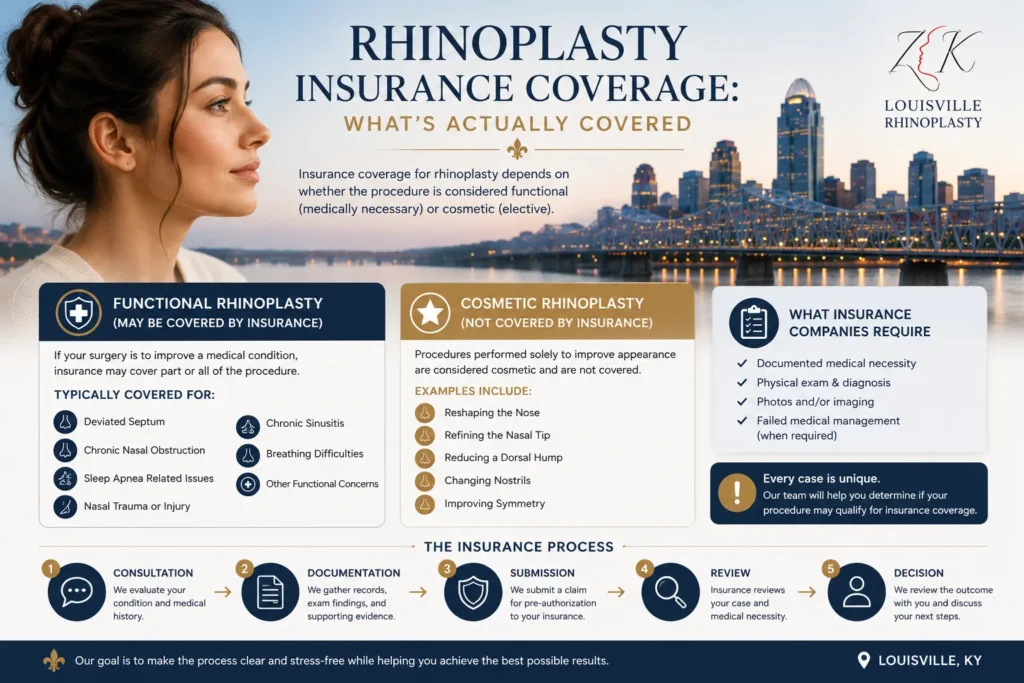
Rhinoplasty insurance coverage depends almost entirely on whether the procedure is classified as medically necessary rather than cosmetic. This guide explains where that line falls, what documentation insurers require, how to request preauthorization, and what self pay and financing options look like when coverage is denied.
The question comes up in nearly every consultation involving a breathing complaint: will insurance actually pay for this? The honest answer is frustratingly specific. Rhinoplasty insurance coverage exists, but only for a narrow slice of what rhinoplasty actually does, and understanding exactly where that line falls can save you from a denied claim or an unpleasant surprise.
Nasal breathing problems are far more common than most patients realize, which is part of why insurers scrutinize these claims so closely. Understanding the real numbers behind nasal obstruction helps explain why documentation, not the surgery itself, decides the outcome of a claim.
Cosmetic vs Functional: Where the Insurance Line Is
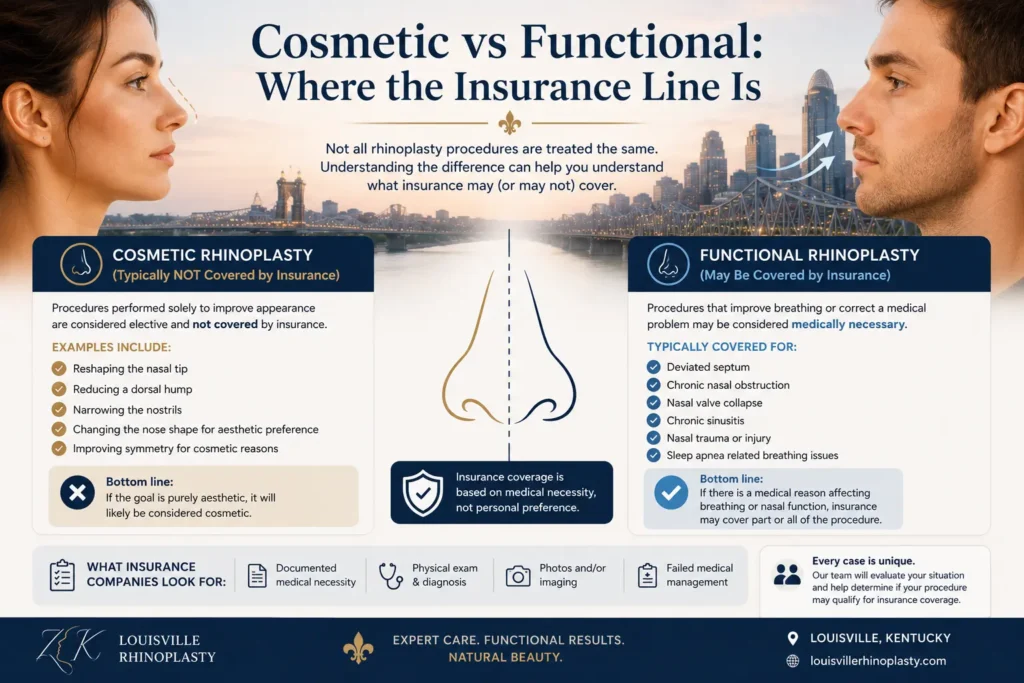
Does insurance cover nose surgery depends entirely on classification. Purely cosmetic rhinoplasty, aimed only at appearance, is essentially never covered by insurance under any circumstances.
Functional rhinoplasty insurance applies specifically to the portion of surgery that corrects a documented medical problem, most often a deviated septum or nasal valve collapse causing significant breathing obstruction.
That distinction matters because the underlying condition is common. A CT based study published in PMC found that some degree of nasal septal deviation appears in up to 89 percent of the general population, and that roughly 260,000 septoplasty procedures are performed annually in the United States alone. Only a fraction of that population ever has obstruction severe enough to qualify as medically necessary, which is exactly the line insurers are checking for when they review a rhinoplasty insurance coverage request.
Septal correction is not a niche procedure either. According to Medscape’s clinical overview of septoplasty, surgical correction of a deviated septum ranks as the third most common head and neck procedure performed in the United States, which is part of why most insurers have a defined, if strict, review process for it rather than treating every request as unusual.
What Documentation Is Required
Cosmetic rhinoplasty insurance denials are common specifically because patients underestimate how much documentation insurers expect before approving the functional portion of a procedure.
A physical examination specifically documenting nasal obstruction
Photographic or endoscopic evidence of structural deviation
A record of failed conservative treatments, such as nasal sprays or allergy medication
In some cases, a sleep study demonstrating obstruction related sleep disruption
How to Request Preauthorization
Rhinoplasty preauthorization typically starts with your surgeon’s office submitting documentation directly to your insurer before surgery is scheduled, rather than after the fact.
Insurance rhinoplasty medical necessity reviews can take several weeks, so starting this process early avoids unnecessary delays to your surgical date once you and your surgeon have agreed on a plan.
What to Do If Claim Is Denied
A denial is not always final. Many insurers allow a formal appeal, particularly if additional documentation, such as a specialist letter or updated imaging, can be submitted to strengthen the case for medical necessity.
Appealing is worth the effort more often than most patients assume. According to research from KFF cited in a Healthcare Dive report on insurance appeal outcomes more than 80 percent of denied claims that are formally appealed within Medicare Advantage plans are eventually overturned, even though only a small share of patients ever file an appeal in the first place. Rhinoplasty insurance coverage denials tend to follow the same pattern: the documentation was often sufficient all along, it simply had not been presented in the format the reviewer needed.
Self Pay and Financing Options
CareCredit rhinoplasty self pay options remain the most common path for the cosmetic portion of a combined procedure, since that portion falls outside insurance coverage regardless of how the functional side is classified.
Most practices, including Dr. Ziad Katrib’s, offer transparent self pay pricing and financing options so patients are not caught off guard by out of pocket costs after a partial insurance approval.
Related ReadingPatients researching rhinoplasty insurance coverage often also read through our guides on rhinoplasty cost by city, the deviated septum and breathing focused side of rhinoplasty, and what to expect during a rhinoplasty consultation before ever filing paperwork with an insurer.
Conclusion
Rhinoplasty insurance coverage is one of the most misunderstood parts of the entire process, and the confusion usually comes from treating rhinoplasty as one single procedure rather than two distinct components. The functional side, correcting a genuine breathing obstruction, has a real path toward coverage when properly documented.
The cosmetic side does not, and pretending otherwise during the claims process only leads to denials and frustration. Understanding this distinction before your consultation puts you in a far stronger position, both for preauthorization and for planning your budget realistically. Dr. Ziad Katrib’s office walks patients through exactly which portion of their procedure may qualify for coverage and what documentation is needed to support that claim, while being upfront about self pay costs for the cosmetic portion from the very first conversation. Nobody should be blindsided by a bill after surgery.
Getting clear answers about rhinoplasty insurance coverage before you schedule anything is one of the simplest ways to protect yourself financially throughout the process.
The consultation is $300, available virtually or in person. Call 502 445 9311 or visit ZKNoses.com to book yours.
Frequently Asked Questions
Will insurance cover a rhinoplasty that fixes both breathing and appearance?
Only the portion classified as medically necessary, typically the septal or valve correction, is eligible for rhinoplasty insurance coverage. The cosmetic refinement portion remains a self pay expense.
How long does insurance preauthorization for rhinoplasty usually take?
It varies by insurer, but several weeks is common, which is why starting the documentation process early is strongly recommended before scheduling surgery.
What if my insurance denies coverage even with documentation?
A formal appeal with additional supporting documentation is often worth pursuing before assuming rhinoplasty insurance coverage is entirely off the table.
Are financing options available if insurance does not cover any part of my surgery?
Yes, most practices offer self pay pricing and third party financing programs specifically for patients whose procedures fall outside insurance coverage.
How common is a deviated septum, and does having one guarantee coverage?
Deviated septums are extremely common, but a diagnosis alone does not guarantee rhinoplasty insurance coverage. Insurers look for documented obstruction and a history of failed conservative treatment before approving the functional portion of a claim.
Does rhinoplasty cost less if part of it is covered by insurance?
Yes, in cases where the functional portion is approved, your out of pocket responsibility typically shrinks to the cosmetic refinement only. Our rhinoplasty cost guide breaks down typical self pay ranges for patients budgeting before a partial approval.
Is revision rhinoplasty ever covered by insurance?
Revision rhinoplasty can be covered when the revision addresses a functional problem, such as a breathing issue that developed or persisted after the first surgery, using the same documentation standards as a primary functional claim.