TL;DR
Rhinoplasty sleep position matters more than most patients expect, since even light contact with the healing nose during sleep can affect swelling and structural results. This guide covers the head elevation rule, whether side sleeping is safe, and when normal sleep habits can resume.
Nobody consciously decides to roll onto their face while asleep. That is exactly the problem.
The hours you are least in control of your body are the same hours your healing nose is most vulnerable, which is why rhinoplasty sleep position gets more attention from surgeons than almost any other single recovery detail.
Why Sleep Position Matters
The nose is swollen, structurally healing, and still settling into its new shape for weeks after surgery. Any pressure against it during sleep, even brief, unconscious contact, can affect swelling and, in rare cases, the developing structure underneath.
How to sleep after rhinoplasty is one of the first things covered in post operative instructions precisely because this risk is so easy to overlook once the initial excitement of surgery day has passed.
The Head Elevation Rule
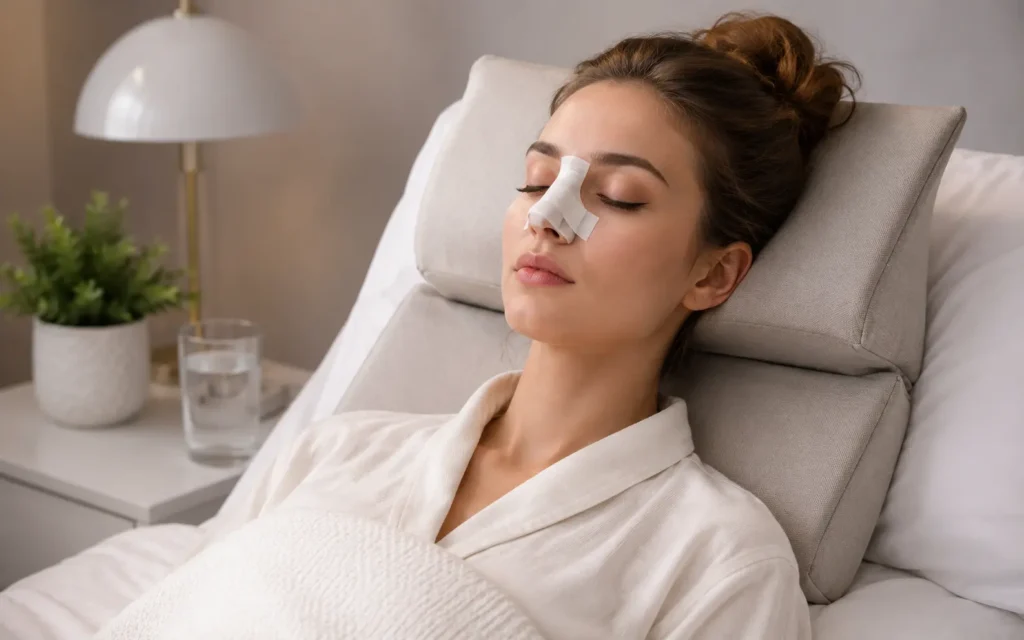
Head elevation rhinoplasty guidance is consistent across most surgical practices: keep your head elevated above heart level for at least the first one to two weeks.
This reduces fluid buildup and swelling significantly, which directly supports the healing timeline described in typical rhinoplasty swelling stages.
- Use two or three pillows, or a wedge pillow, to maintain elevation comfortably through the night
- Some patients find a recliner more comfortable than a bed for the first several nights
- Avoid letting your head slide down flat during the night by propping pillows on either side
Can You Sleep on Your Side
Rhinoplasty back sleeping is the standard recommendation for the first several weeks, since side sleeping introduces direct pressure risk against the healing nose.
Most surgeons clear patients to gradually return to side sleeping around the four to six week mark, though this timeline depends on individual healing and surgical complexity.
What If You Roll Over
This is the fear almost every patient shares, and the reassuring reality is that a single accidental roll rarely causes lasting harm.
Post op sleep nose job concerns are usually more about sustained pressure over multiple nights than a single brief incident. If it happens once, check for unusual pain or a change in shape, and mention it at your next follow up if anything feels off.
When Can You Return to Normal Sleep
Rhinoplasty pillow position requirements ease gradually. Most patients are cleared for normal sleep habits, including their preferred side or stomach position, somewhere between four and six weeks after surgery, in line with when the more dramatic phase of swelling begins settling.
Sleeping after nose surgery does become easier with each passing week, and by the one month mark, most patients report the elevated position feels routine rather than restrictive.
Conclusion
Rhinoplasty sleep position is one of the least glamorous parts of recovery, and also one of the most important. Nobody plans their surgery around pillow arrangements, but the hours spent unconscious every night are exactly when a healing nose is most exposed to accidental pressure.
Following the head elevation rule for those first couple of weeks, avoiding side sleeping until cleared, and being mindful of pets or partners in the bed are small habits that protect a result you are otherwise doing everything right to achieve. Dr. Ziad Katrib walks every patient through specific rhinoplasty sleep position guidance before surgery, so nobody is left guessing about pillow setups or worrying over a single accidental roll in the middle of the night. Recovery is full of small details like this one, and getting them right during the early weeks is what protects the outcome you have already invested so much time, money, and patience into achieving.
The consultation is $300, available virtually or in person. Call 502-445-9311 or visit ZKNoses.com to book yours.
Frequently Asked Questions
How long do I actually need to sleep elevated after rhinoplasty?
Most surgeons recommend maintaining elevated rhinoplasty sleep position for at least the first one to two weeks, tapering off gradually afterward as swelling reduces.
What happens if I accidentally sleep on my side one night?
A single incident rarely causes lasting damage. Watch for unusual pain or swelling and mention it to your surgical team if anything feels different afterward.
Can I use a regular pillow instead of a wedge pillow?
Yes, stacking two or three regular pillows works for most patients, as long as your head stays elevated above heart level throughout the night.
Is it safe to sleep with a pet in bed during recovery?
It is safer to keep pets out of bed for the first couple of weeks, since an unexpected jump or movement could put pressure on your healing nose during sleep.