
TL;DR
Rhinoplasty recovery week by week follows a fairly predictable pattern, but most patients are not given a realistic breakdown before surgery, which leads to unnecessary worry during normal healing stages. Rhinoplasty Indianapolis | Dr. Ziad Katrib patients receive a full recovery walkthrough during consultation, covering exactly what to expect from the first week through the full year mark. Here is the real rhinoplasty recovery timeline, including what is normal, what speeds healing along, and what you should avoid entirely.
The week after rhinoplasty rarely matches what people picture going in. Swelling, bruising, a cast on your face, and an overwhelming urge to check the mirror every hour even though your surgeon already told you not to expect anything yet.
That gap between expectation and reality is one of the most common reasons patients report unnecessary anxiety during otherwise normal healing. Whether you found this after researching rhinoplasty cost Indianapolis, rhinoplasty cost Lexington KY, or rhinoplasty cost Cincinnati, this breakdown covers the part of the process that pricing pages rarely explain in detail, what actually happens to your face week by week after surgery.
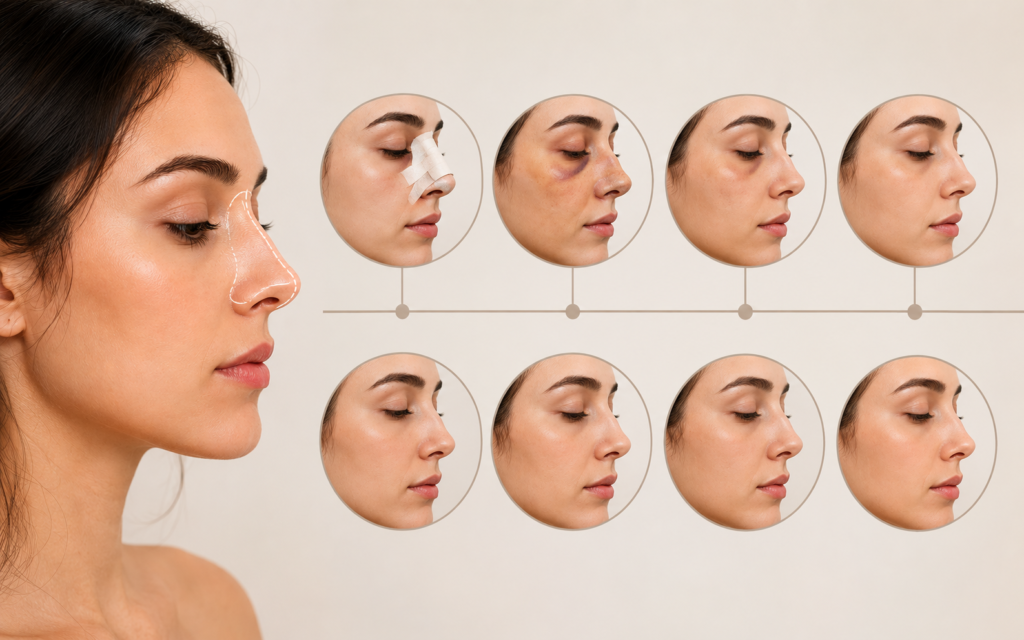
Week 1: Cast and Splints
The first week after surgery is, by most patient accounts, the hardest part of the entire process, though not for the reasons people expect. The nose is protected by a cast or splint, and bruising and swelling around the eyes is common and can look more dramatic than it feels.
Rhinoplasty cast removal typically happens around day 7, revealing a nose that is still considerably swollen. This is completely normal and is not representative of the final shape in any way.
During week 1, rest is the priority. Most patients take the full week off work or social obligations, sleep with their head elevated, and avoid any strenuous activity entirely.
Weeks 2-4: Swelling and Tape
After the cast comes off, many surgeons, including Dr. Katrib, apply tape to the nose for a period to help manage swelling and support the healing tissue underneath.
This stage is often the most psychologically difficult because the cast is gone, meaning the nose is visible, but the swelling has not yet resolved enough to show anything close to the final shape. Patients commonly describe feeling discouraged here, even though this is an entirely expected and normal part of rhinoplasty swelling phases.
By the end of week 4, most visible bruising has resolved, and patients typically feel comfortable returning to low key social situations.
Month 2-3: Studio Ready
Around the two to three month mark, swelling reduces significantly, and most patients reach what is sometimes referred to as studio ready after rhinoplasty, meaning the nose looks good enough in photos and in person that the surgical change is no longer the focal point others notice.
This is often the stage where patients start to feel like themselves again, though the nose continues to refine subtly for many more months beyond this point, particularly at the tip.
Months 6-12: Final Refinement
The tip of the nose holds onto swelling the longest of any area, due to its thicker skin and the more delicate cartilage work typically performed there. Between months 6 and 12, the tip gradually loses its remaining swelling and reveals the truly final shape.
This is the point at which most surgeons, including Dr. Katrib, consider the result fully settled and ready for final evaluation against the original surgical goals.
How to Speed Up Recovery
While healing cannot be rushed beyond what the body allows, several rhinoplasty recovery tips can help the process go as smoothly as possible:
- Sleep with your head elevated for at least the first two weeks to reduce swelling
- Avoid blowing your nose for several weeks as instructed by your surgeon
- Stay well hydrated, which supports overall tissue healing
- Apply cold compresses around the eyes, not directly on the nose, during the first few days if recommended
- Attend all scheduled follow-up visits so your surgeon can monitor healing progress
What Not to Do
Understanding rhinoplasty recovery dos dont’s is just as important as knowing what helps. Common mistakes that can interfere with healing or risk injury include:
- Wearing glasses that rest on the bridge of the nose before your surgeon clears you to do so
- Engaging in strenuous exercise or activities with a risk of facial impact too early in recovery
- Sun exposure on the healing nose without protection, which can affect scarring and swelling
- Picking at or manipulating tape or splints before your surgeon removes them
- Judging your final result based on how your nose looks at 2 to 4 weeks
Conclusion
Rhinoplasty recovery is not a single event with a clear endpoint. It is a gradual, predictable process that unfolds in distinct stages over roughly a year, and understanding each stage in advance is one of the most effective ways to reduce anxiety during a process that can otherwise feel alarming.
Here is the timeline to keep in mind:
- Week 1: Cast on, significant swelling and bruising, rest is the priority
- Weeks 2 to 4: Cast off, tape applied, swelling still visible but bruising resolving
- Months 2 to 3: Studio ready, most swelling resolved, comfortable returning to normal life
- Months 6 to 12: Final tip refinement, truly final result becomes visible
Dr. Ziad Katrib, MD walks every patient through this exact recovery timeline during consultation, because knowing what to expect at each stage makes the entire process feel manageable rather than uncertain. Follow-up visits are typically included in the surgeon’s fee, ensuring your healing is monitored every step of the way.
The consultation is $300, available virtually or in person. Call 502-445-9311 or visit ZKNoses.com to book yours.
Frequently Asked Questions
How long does it take to recover from rhinoplasty?
Initial recovery, including cast removal and resolution of most visible bruising, takes about 2 to 4 weeks. The final result is not fully visible until approximately 6 to 12 months after surgery, once all swelling, particularly at the tip, has resolved.
When can I return to work after rhinoplasty?
Most patients take one full week off for the initial recovery period, though this varies depending on the nature of your work and how visible residual swelling and bruising are to you personally.
Why does my nose still look swollen at 6 weeks?
Six weeks is still relatively early in the rhinoplasty recovery timeline. The tip in particular retains swelling the longest, often taking 6 to 12 months to fully resolve and reveal the final shape.
What is the studio ready after rhinoplasty?
Studio ready generally refers to the 2 to 3 month mark, when swelling has reduced enough that the nose looks natural and presentable in photos and in person, even though subtle refinement continues for several more months.